
The best seat in the backyard
Spa Resurfacing in Southern California
Smooth against your back, no white ring at the waterline, and a finish that finally matches the pool it spills into. We resurface the concrete and gunite spa built into your pool — same materials, same crew, usually the same visit.
(951) 419-4206Free estimates. Financing available. Licensed — CSLB #1148412.
Run by Oscar Retana, twenty-one years on Southern California pools and spas, with his sons on the same crew. One fixed price in writing before anything comes out.
Where we work most: Riverside, Redlands, Hemet, Murrieta, Corona and Anaheim — and across five counties: Moreno Valley, Temecula, Menifee, Rancho Cucamonga, Ontario, Fontana, Chino Hills, Irvine, Orange, Pasadena, Glendora, Whittier, Carlsbad, Oceanside, Vista and everywhere in between.
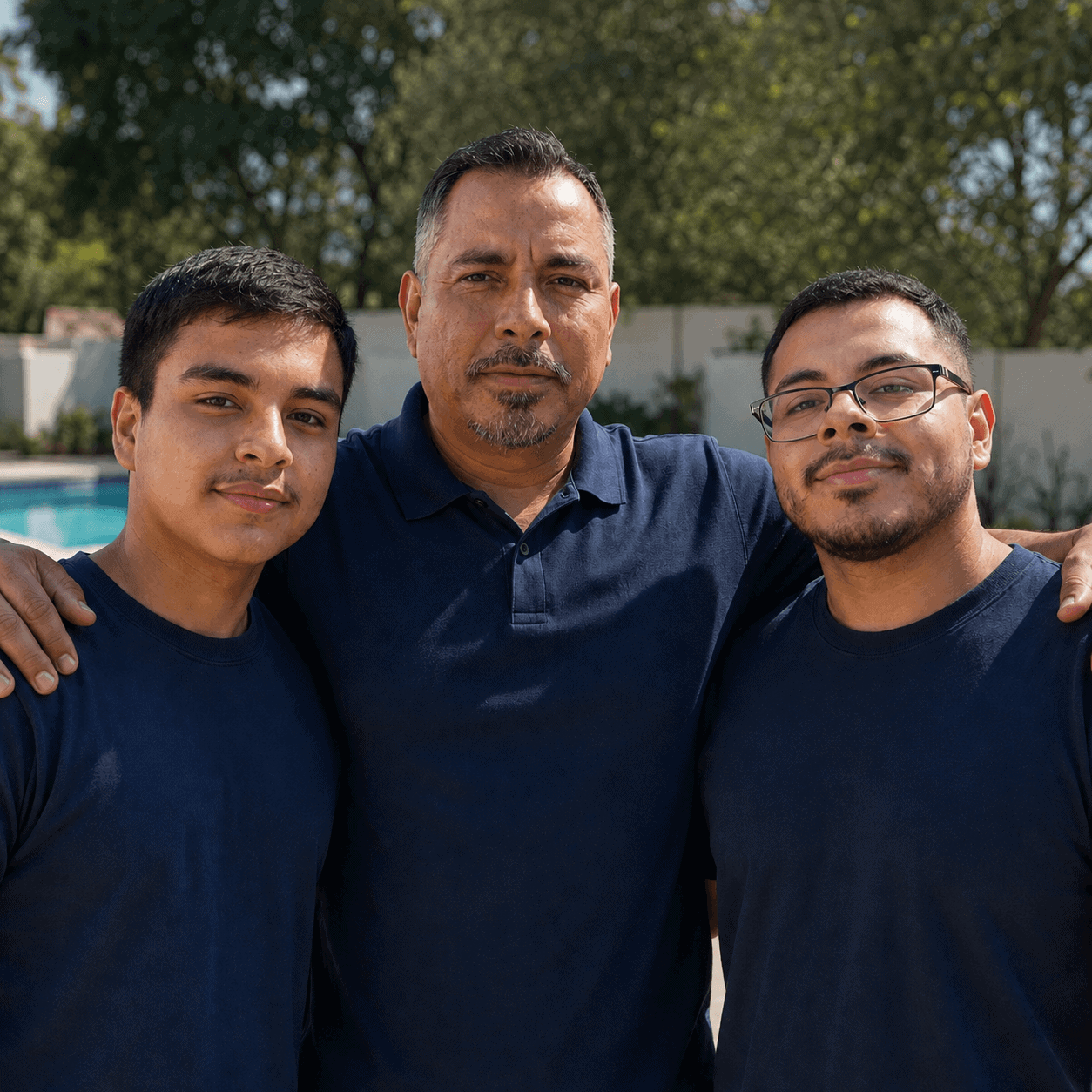
Oscar Retana and his sons — the crew that will be in your backyard. CA’s Finest & Quality Pool Plastering Inc, Riverside County.
Who will be in your backyard
In a spa, almost everything is an edge
“A pool is mostly open wall. A spa is all corners, seats and fittings. That part is hand work and it always will be.”
A spa the size of a dining table can hold a dozen jets, a light, a spillway lip, two benches and a footwell. Every one of those is an edge the finish has to turn cleanly, and there is no machine that does it. It is a trowel and somebody who has done it a few hundred times.
Oscar has twenty-one years of it, more than a hundred pools and spas behind him, and his sons work alongside him. The same three or four people from the day the old surface comes out to the day you get in. Nobody gets handed off to a crew you have never met.
That matters more on a spa than anywhere else in the backyard, because you are closer to it. You sit in it. Your hands and your back are on that surface for an hour at a time, which is a level of inspection a pool floor never gets.
And it gets done the way we would want it at our own house, because it is our own name on it. Most of our work comes from somebody who was sent by a neighbour.
You will have Oscar’s number, in English or Spanish, whichever you prefer.
Thirty seconds of orientation
Which kind of spa do you have?
Two completely different things get called a spa, or a Jacuzzi, or a hot tub — and knowing which one is in your yard saves you a phone call.
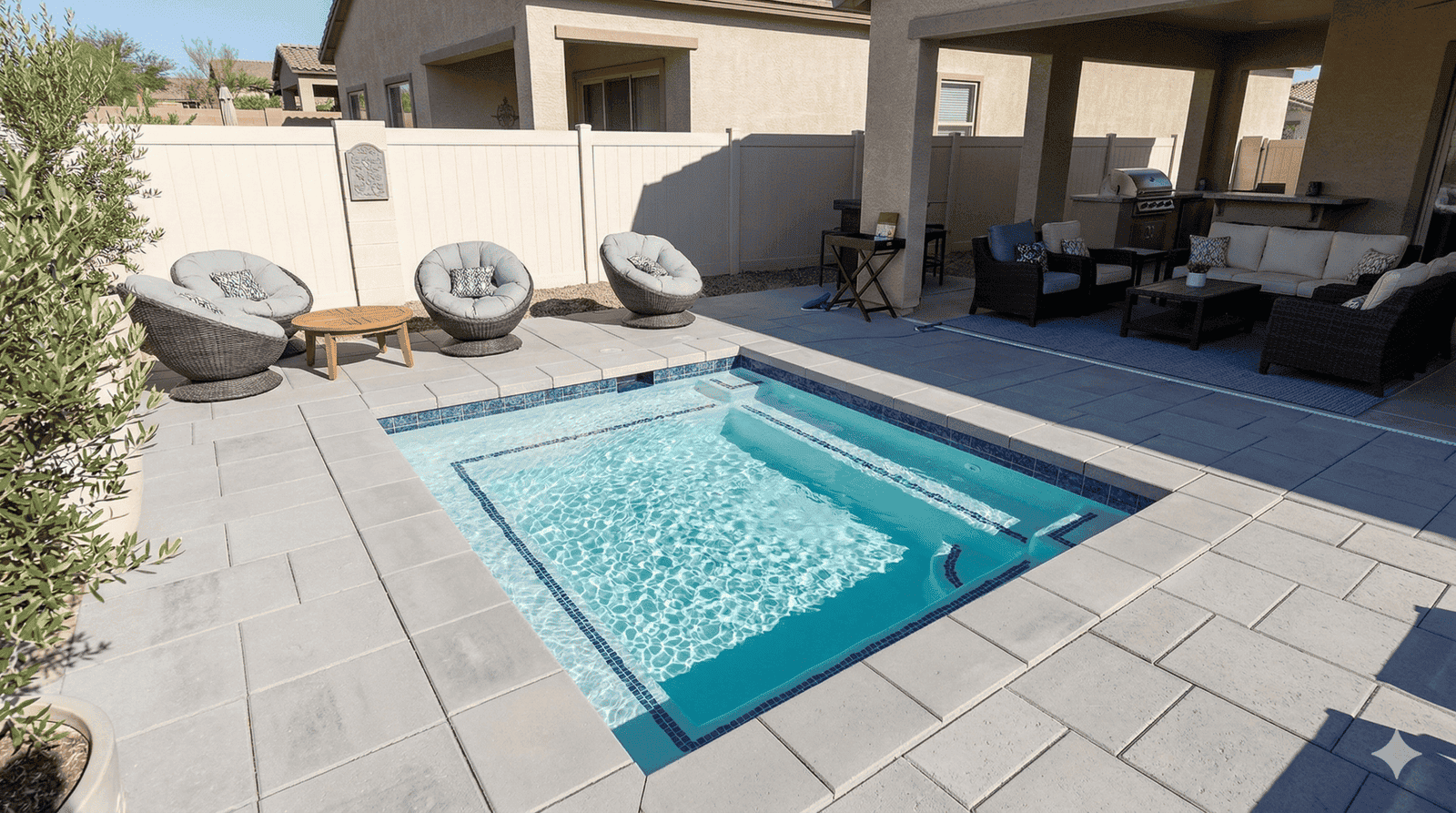
A gunite or concrete spa is built, not delivered. It is part of the same shell as your pool, usually raised a step above it, often spilling over the edge into it, with the same plaster or pebble interior the pool has. It is a small pool that runs hot.
That is the one we resurface — same materials, same crew and same process as the pool, and usually in the same visit, which is where the real saving is.
A portable hot tub is an acrylic shell in a cabinet with a pump, a heater and a circuit board inside. It sits on a pad or a deck and it plugs in. When one of those needs work you want a hot tub technician, and we will point you at one in half a minute on the phone rather than send somebody out to tell you.
The easiest way to tell them apart: look at where the water goes. If it spills into the pool, it is built in and it is ours. If you could theoretically drag it across the yard, it is portable.
Built in, and ours, if…
- It shares a wall with the pool
- Water spills from it into the pool
- It is a step up from the pool deck, in the same concrete
- The inside feels like the pool — plaster or pebble, not acrylic
- There is a tile band at its waterline
- It was there when you bought the house and it is not going anywhere
Why yours looks older
The spa wears out before the pool, and that is normal
People are often surprised that their spa looks a decade older than their pool. It is not bad luck and it is not bad workmanship. It is heat, and it is the same in every backyard in the Inland Empire.
Your pool sits somewhere around eighty degrees. Your spa runs at a hundred and two to a hundred and four. That gap changes the chemistry of the water sitting against the surface, and it changes it in every direction at once.
Hot water holds less calcium in solution, so scale forms faster and heavier — which is why the ring around a spa waterline is always worse than the one around the pool. Hot water burns off sanitizer faster, so the chemistry swings more between treatments. And the spa is heated and cooled constantly, expanding and contracting in a way a pool never does.
On top of that, a spa holds a fraction of the water in a fraction of the space, with far more people per gallon when it is used. Everything that wears a surface happens to a spa harder and more often.
So if yours feels rough on the back of your legs while the pool still feels fine, nothing has gone wrong. The spa has simply reached the end of its surface first, which is what spas do — and it is a few days of work to give it back.
What a spa at the end of its surface looks like
- A heavy scale ring that comes back weeks after cleaning
- Rough underfoot, and rough against your back on the seats
- Chalky residue on your hand when you rub the wall
- Dark staining in the footwell and around the jets
- Grout missing or crumbling at the waterline tile
- A surface visibly different in colour to the pool beside it
Our testimonials
Real experiences. Real results.
Hear it from the people whose backyards we worked in. Then read the reviews straight from our Google profile, below.
A customer on how the job went, start to finish.
Another customer, another backyard in Southern California.
Real reviews from real clients
Every one of them written by somebody whose pool we worked on, in Riverside, San Bernardino, Orange, Los Angeles or San Diego county. Several are in Spanish, because a good share of our customers are.
We would rather you read them before you call us than after.
The one decision that matters
Do the spa with the pool and they will match
This is where the money goes furthest on a spa, and it is the one thing worth deciding before anything else.
The spa is the one part of your backyard that sits directly against the pool, in the same line of sight, usually with water running between them. When both finishes are new on the same day, the whole backyard reads as one piece — and that is the version people are actually picturing when they call us.
Doing both at once also costs far less than doing them a year apart, and not because of a discount. Everything in this work happens with the water out: the drain, the crew, the equipment on site, the material delivery. Those costs exist once. Adding the spa to a pool project means paying for the spa’s surface, not for a second setup.
The reason we lead with it is simple. A new finish never matches an aged one — not because of the colour you pick, but because ten years of sun and minerals have faded the older surface. Fresh plaster beside it reads brighter. With a pebble finish the difference is wider still, because new stone still has its shine. So if the pool is due within a few years anyway, this is the year to do them together.
And the other direction is just as true, because we would rather you spend it well: if your pool has five good years left and only the spa is finished, we will quote the spa on its own and tell you to leave the pool alone.
The three ways people do this
Both together. The normal choice and the best value by a distance. One drain, one crew, one finish, everything matching.
Spa only. Exactly right when the pool is genuinely fine. Carries a minimum, because the setup costs the same either way.
Pool only, spa later. The one we steer people away from. Two setups paid for, and a mismatch to look at in between.
What is included
What resurfacing a spa involves
Same materials as the pool, in a quarter of the space and with four times the detail. Small is not the same as easy.
The interior surface
The old finish chipped out and a new one installed — white plaster, quartz, or a mini pebble or StoneScapes finish, matched to whatever is going in the pool.
Most people put pebble in the spa even when the pool gets plaster, because the spa takes the most abuse and pebble holds up to hot water considerably better.
matched to the pool
Waterline tile and the spillway
The tile band at the spa waterline, and the spillway lip where the water runs over into the pool. Both scale heavily in hot water, and both sit right at eye level.
New tile on the spillway changes how the spa reads more than anything else you can do to it, and it is a small line item inside a bigger job.
the most visible fix
Jets, fittings and the seats
Every jet, light and fitting masked, cut in around, and finished cleanly. A spa the size of a dining table can have a dozen of them, plus benches and a footwell with edges the finish has to turn.
This is where the craft is, and it is why a spa is not simply a small pool to price. More edge and more detail per square foot than anywhere else in the project.
where the work really is
Two things we will always tell you straight. Heaters, pumps, blowers and control systems are equipment work — if your spa needs a new heater as well as a new surface, do it while the spa is drained, because it will never be easier to get at, and we will coordinate with whoever does it. And building a brand new spa onto an existing pool is construction rather than resurfacing, which is its own conversation.
What this page is about is the spa you already have, and making it look like it went in last week.
What it costs
How much spa resurfacing costs
We quote by linear feet of perimeter, same as the pool — a spa is usually somewhere around twenty to thirty-five feet around. But on a spa the perimeter is only half the answer, and the other half is the part nobody explains.
Why the spa is so cheap to add, and why it carries a minimum alone
One setup, two finishes
A spa might be twenty-five linear feet against a pool’s hundred and twenty. But the parts of the job that cost money before anybody touches a trowel — draining, getting the crew and the equipment to your house, the supplier’s material minimum, hauling the debris away — are the same whether we are resurfacing a spa or a whole pool.
So a spa done with the pool is genuinely inexpensive, because all of that is already paid for. That is the whole reason we push people to do both at once, and it is the single biggest saving available on this page.
A spa done alone costs more per foot than a pool does, and it still makes sense when the pool has years left. We would rather explain why than quote a per-foot number that turns into a different number later.
Any figure you see for spa work anywhere is an approximate starting figure for orientation only — it is not a quote and it is not a price promise. We do not publish a rate per foot for a spa at all, and on this one in particular a published rate would mislead you — the same spa is a very different number depending on whether it goes in with the pool or on its own, and no web page knows which of those you are. You get one fixed number in writing after Oscar has come out and measured it, free, quoted both ways so you can see the difference in front of you, and it does not move afterwards.
Financing is available. Ask about it when you call — it is worth asking before you decide between doing the spa now and doing both together, because that is exactly the decision financing tends to settle.
How long it takes
With the pool: no extra time at all, in most cases. The spa gets done in the same passes as the pool.
On its own: usually under a week, including the fill and the start-up.
Either way there is the same two weeks of brushing and chemistry afterwards, and on a spa it matters even more — hot water is less forgiving of a brand new surface than cool water is. We walk you through it rather than hand you a full spa and drive off.
What happens, in what order
How a spa resurfacing job goes
The same four steps as the pool, with one difference at the end that is worth knowing now.
Step 1
We look at both
Free, at your house. We measure the spa and the pool, and tell you honestly whether the pool is due too or whether it genuinely has years left.
Step 2
Fixed price in writing
The finish, the tile, the spillway, and whether the spa is done alone or with the pool. Both numbers if you want to compare them. Ask about financing here.
Step 3
Drain, chip out, prepare
Old surface out, jets and fittings masked, the shell prepared. Anything we find underneath gets a photo and your approval before it is covered.
Step 4
New finish, then water
The new surface goes on and gets cut in cleanly around every fitting and seat edge, then we fill it and walk you through the start-up.
The one difference: give it two weeks before you heat it
A new surface cures for about two weeks. On a pool nobody is tempted. On a spa the heater is right there, and heating a curing surface is the one thing that can take years off a brand new finish.
So we give you the exact date the heater can come on, in writing with the rest of the paperwork. It is usually a week or two after the fill, and waiting for it is the cheapest thing you will ever do for the life of that surface.
The brushing matters more here too, because a spa’s small volume concentrates the plaster dust faster. We walk you through it and leave it written down.
Not sure what your spa actually needs?
Sometimes what bothers people is the surface, sometimes it is the tile, and sometimes it is the water chemistry. There is a table on our services page that matches what you are seeing to what it usually is.
Written guarantee on our workmanship
If something fails because of our workmanship within the first year, we come back and repair it. No cost, no argument — and it is in writing before we ever start, not promised verbally at the door.
Real work, real results
Recent work around the Inland Empire
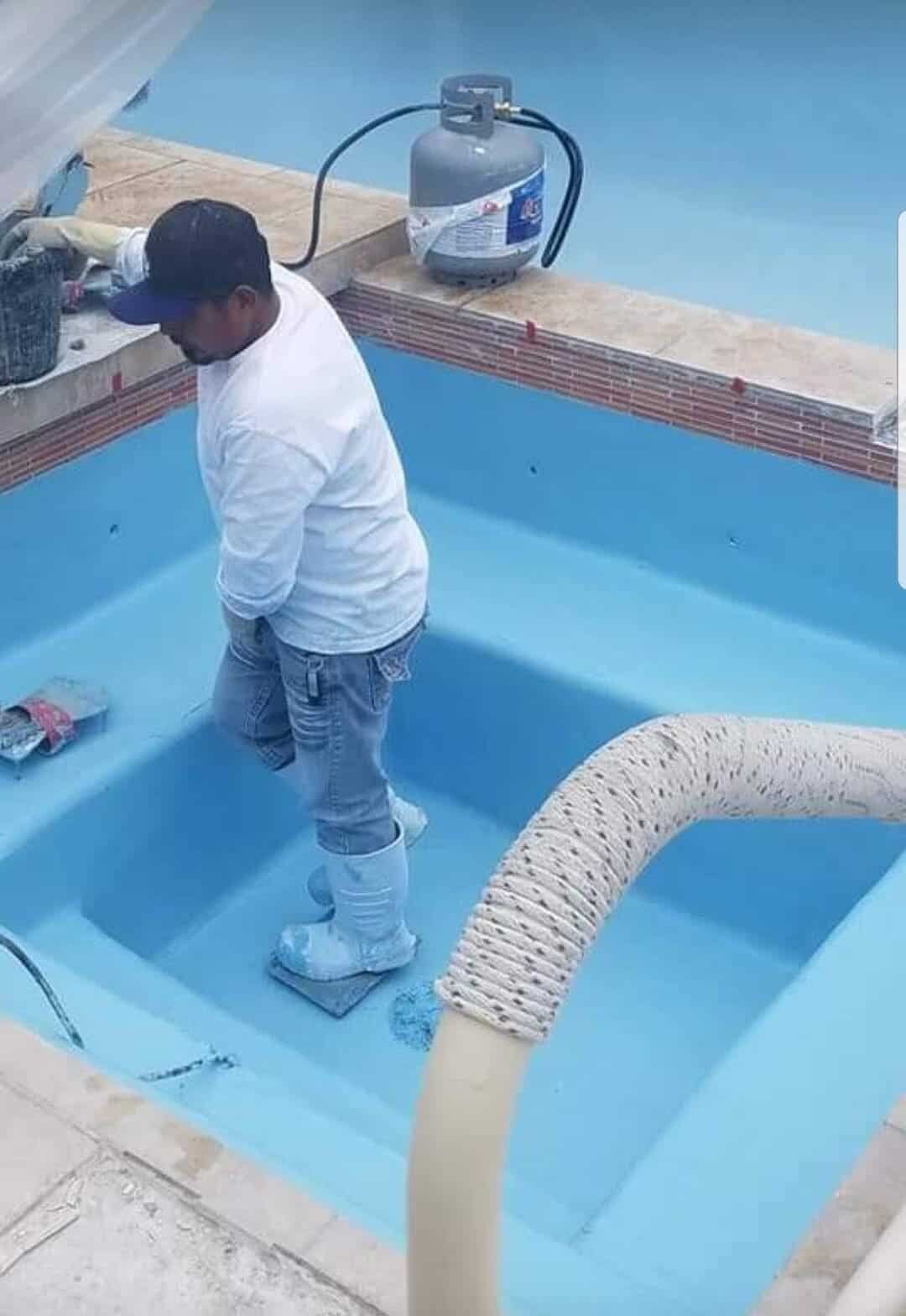
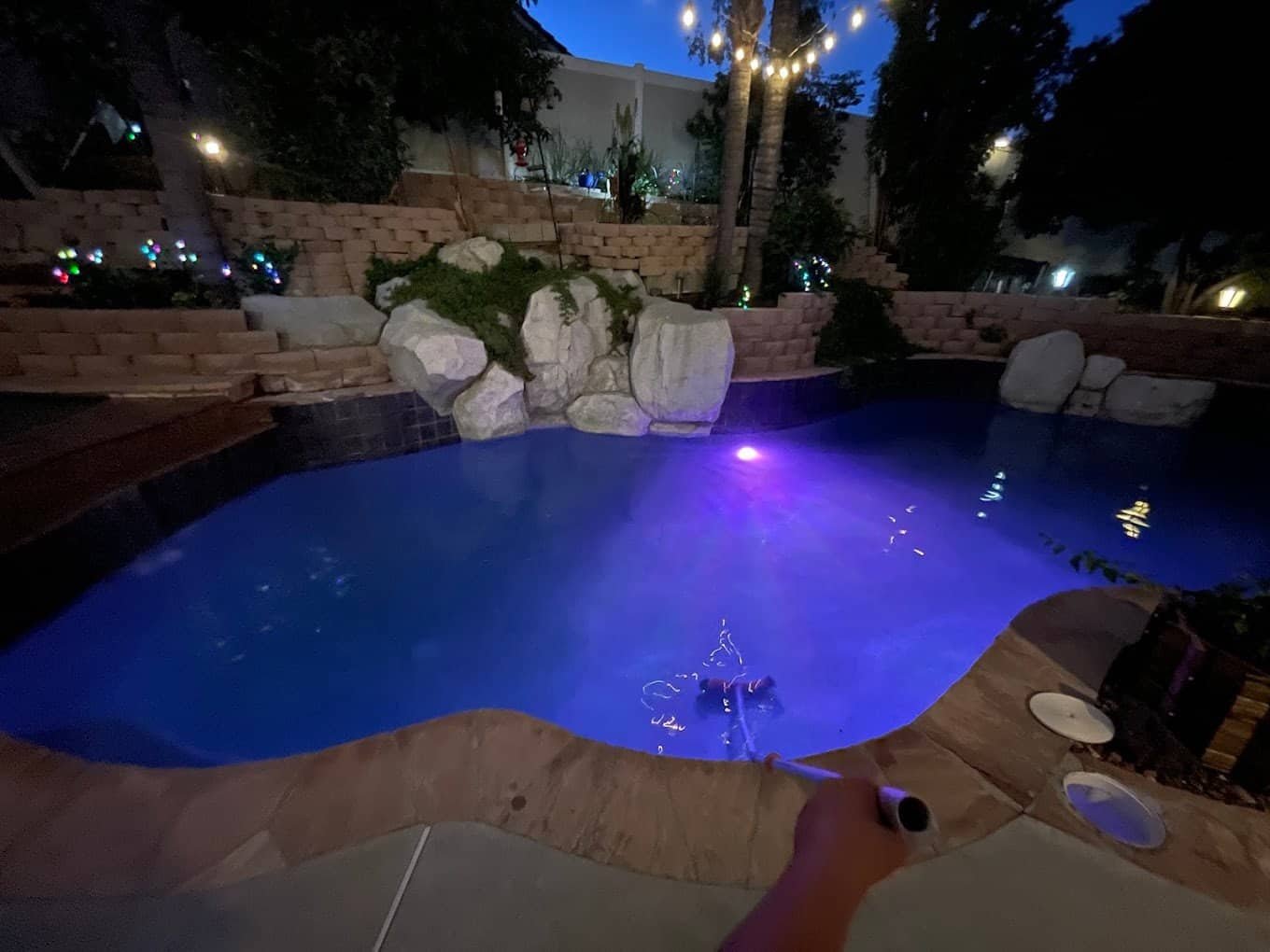
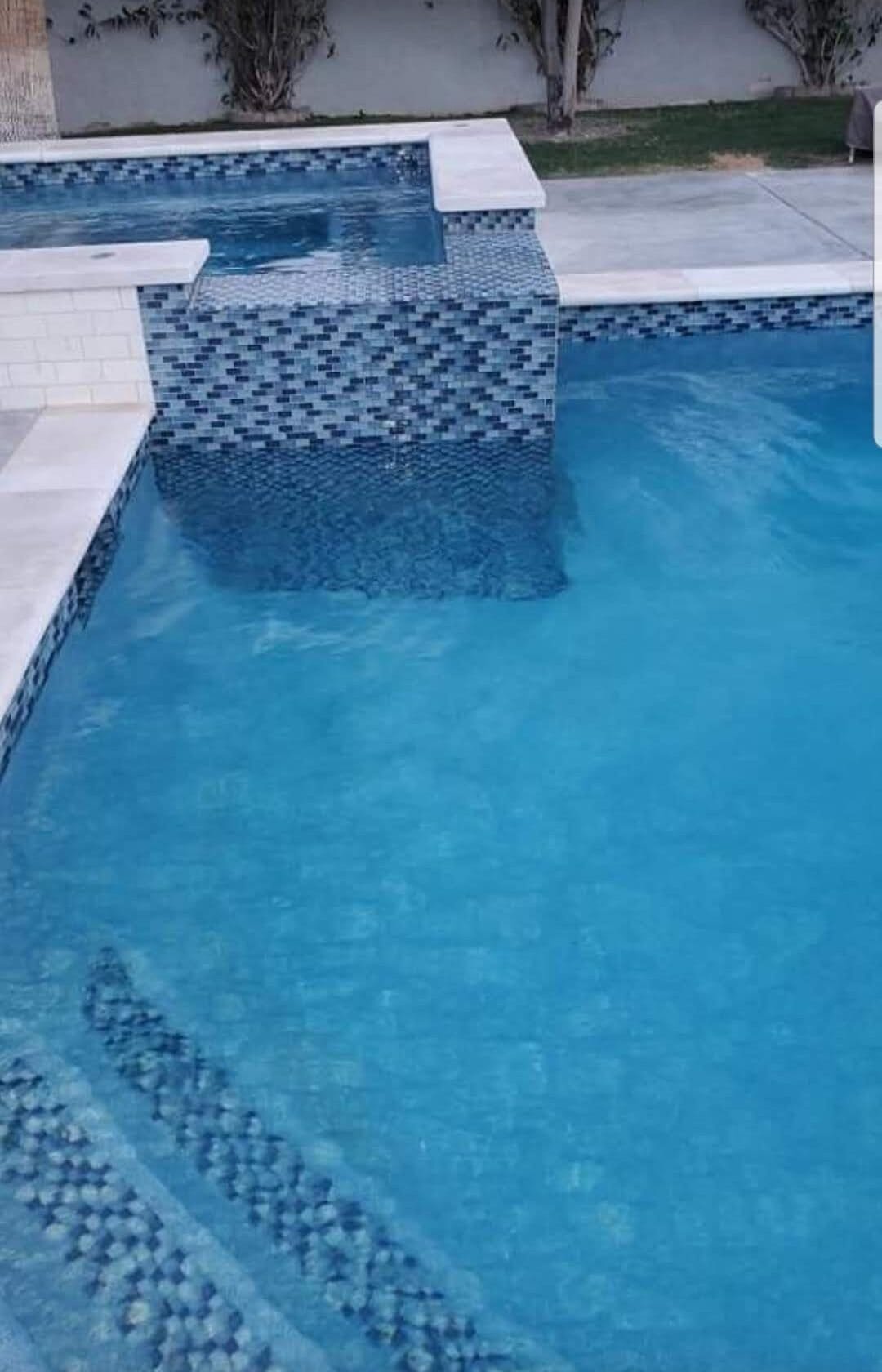
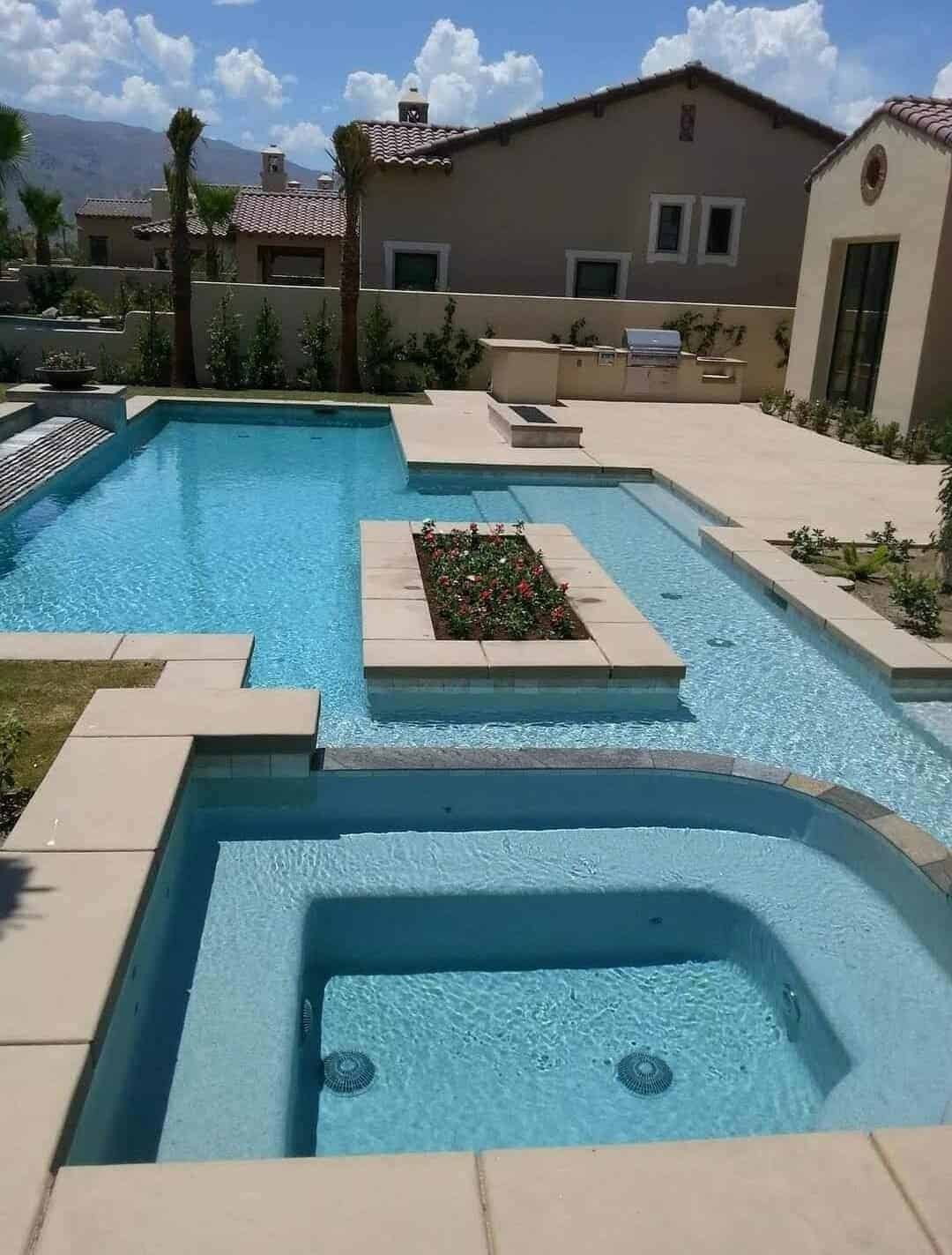
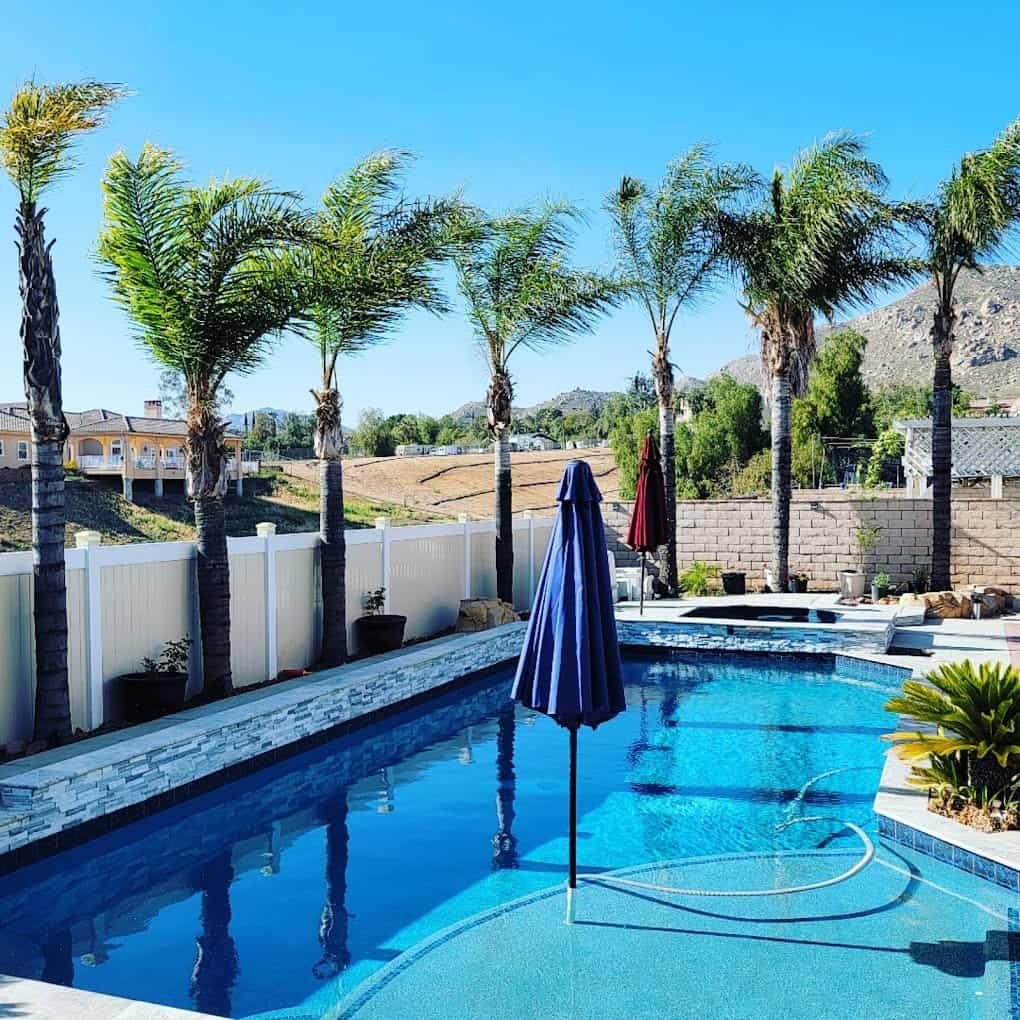
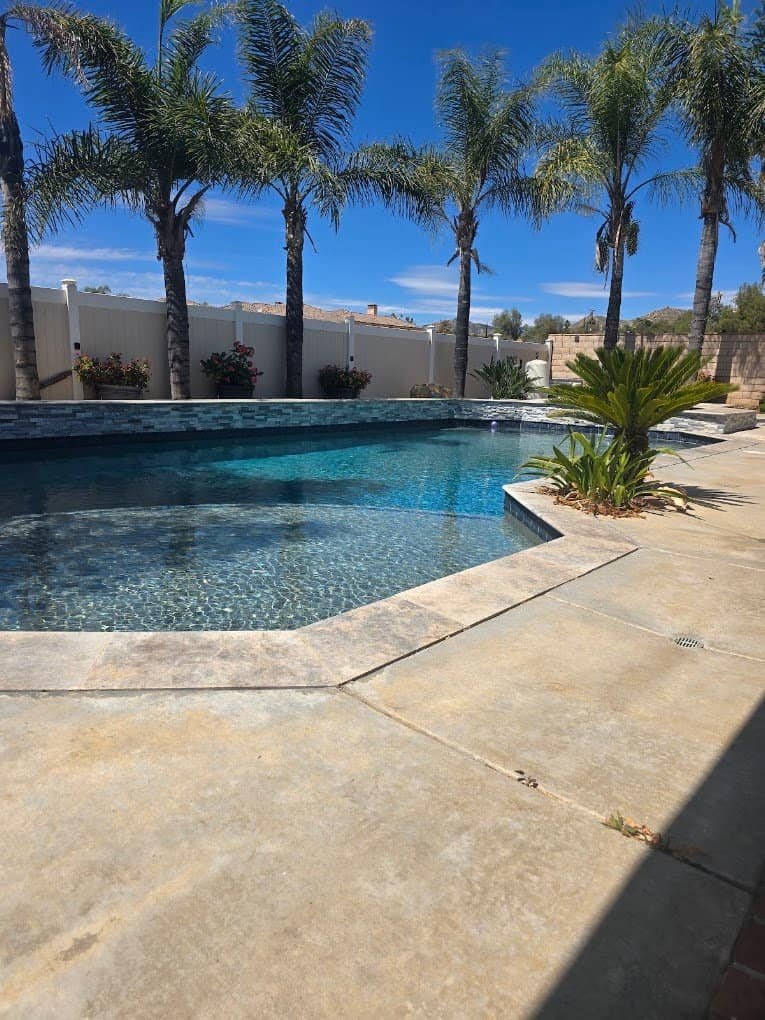
No stock photography — every project shown here is one of ours, in a real backyard.
off your first remodeling or new construction project
For every new customer, on top of whatever the quote already says — your first pool and spa remodeling or new pool construction project with us. Veterans and active-duty military, always. And ask about financing while you are at it. Just mention it when you call.
Where we work
Gunite spa resurfacing in Riverside, San Bernardino, Orange, Los Angeles and San Diego counties
We are based in Riverside County. Almost every attached spa we resurface goes in with the pool it belongs to — which is the cheapest way to do it and the only way the two surfaces end up matching.
Riverside County
Riverside, Hemet, Murrieta, Corona, Moreno Valley, Temecula, Menifee, Perris, Lake Elsinore, Eastvale
San Bernardino County
Redlands, Rancho Cucamonga, Ontario, Fontana, Chino Hills, Upland, Rialto, Highland, Yucaipa
Orange County
Anaheim, Irvine, Orange, Yorba Linda, Fullerton, Tustin, Brea, Villa Park
Los Angeles County
Pasadena, Glendora, Whittier, Claremont, San Dimas, La Verne, Arcadia, Covina
San Diego County
Carlsbad, Oceanside, Vista, San Marcos, Escondido, Encinitas, Fallbrook
The practical questions
Spa resurfacing questions we get asked
These are the ones that come up on almost every spa estimate.
Can you resurface just the spa, without doing the pool?
Yes, and sometimes it is exactly the right call — when your pool genuinely has years of surface left and only the spa is finished.
It carries a minimum, and the reason is not padding. Draining, getting a crew and equipment to your house, the supplier’s material minimum and hauling the debris away cost the same whether the job is twenty-five linear feet or a hundred and twenty.
We will quote it both ways at the estimate — spa alone, and spa with the pool — so you can see the difference in front of you and decide.
Will the new spa surface match my existing pool?
If the pool is new, yes, and the small difference closes as the spa ages. If the pool is ten years old, no — and this is the thing we most want people to hear before they decide.
A new finish never matches an aged one. Not because of the colour you choose, but because years of sun, minerals and chemistry have faded and dulled the older surface. Fresh plaster beside it reads brighter and cleaner. With pebble the gap is wider still, because new stone has its shine.
The spa sits directly against the pool, in the same line of sight, usually with water running between them, so there is nowhere for that difference to hide. If the pool is due within a few years, do both at once — it is cheaper than doing them a year apart and you get the backyard you were picturing.
Why does my spa look so much worse than my pool?
Heat. Your pool runs around eighty degrees and your spa runs at a hundred and two to a hundred and four, and that changes everything about how the water behaves against the surface.
Hot water holds less calcium in solution, so scale forms faster and heavier — that is why the spa’s waterline ring is always the worst in the backyard. It burns off sanitizer faster, so the chemistry swings more. And the spa is heated and cooled constantly while the pool just sits.
Add far more people per gallon when it is used, and everything that wears a surface happens to a spa harder and more often. A spa reaching the end of its surface while the pool still looks fine is completely normal, and it is a few days of work to put right.
Which finish is best for a spa?
Pebble, more often than in a pool. The spa takes the most punishment of anything in the backyard, and a pebble finish holds up to hot water and heavy scaling considerably better than plaster does.
Plenty of people put plaster in the pool and pebble in the spa for exactly that reason, and the two still read as one backyard when the colours are chosen together. We bring samples and hold them against each other before you decide.
The one thing we steer people away from in a spa is colored plaster. It mottles in a pool within two to three years, and in hot water with heavy scaling it goes faster. If you want the dark-water look in a spa, that is a dark pebble finish rather than pigmented plaster.
Do you offer financing?
Yes. Ask about it when you call and we will walk you through the options.
It is worth asking early on this one in particular, because the usual decision here is between doing the spa now and doing the spa and the pool together. Spread out, the second option is often closer to the first than people expect — and it is the version that actually matches.
What about the spillway where the spa runs into the pool?
It should be part of the job, and it is the detail that changes how the spa looks more than anything else.
The spillway lip is wet, dry, hot and cold constantly, and it carries the heaviest mineral load in the whole backyard because that is where the hot water leaves the spa. It scales worse than the waterline and it sits right at eye level.
New tile on the spillway is a small line item with an outsized effect. Anyone quoting a spa resurfacing without mentioning it has not looked closely.
How soon can I get in and heat it?
Not as soon as it is full, and this is the one piece of timing that is worth taking seriously.
A new surface cures for about two weeks. On a pool nobody is tempted. On a spa the heater is right there — and heating a curing surface can take years off a finish that just went in.
We give you the exact date the heater can come on, in writing. It is usually a week or two after the fill, and waiting for it is the cheapest thing you will ever do for the life of that surface.
Do you repair portable hot tubs?
No — that is a different trade. If your spa is a portable acrylic hot tub, the kind in a cabinet that plugs into the wall, you want a hot tub repair technician. Heaters, pumps, control boards, jet plumbing and covers are their work.
What we resurface is gunite and concrete spas: the ones built into the same shell as your pool.
Call us anyway if you are not sure which you have. It takes thirty seconds to sort out on the phone, and we would rather tell you for free than send somebody out to say it.
Do you fix the jets, the heater or the pump?
Those are equipment work rather than surface work. What we do is mask and cut in cleanly around every jet and fitting so the new finish finishes properly against them.
Here is the useful part: if your spa needs equipment work as well as a new surface, do it while the spa is drained. It will never be easier or cheaper to get at than when the water is already out, and we will happily coordinate with whoever does it.
Can you add a spa to my existing pool?
That is construction rather than resurfacing — a new shell, plumbed into your existing equipment — and it belongs with our new construction side rather than on this page.
What this page is about is the spa you already have, and making it look like it went in last week.
Is the work guaranteed?
Yes — a written one-year guarantee on our workmanship, handed to you with the paperwork rather than promised verbally.
We are also a licensed California contractor, CSLB #1148412. You can look that number up at cslb.ca.gov and see the status yourself in about thirty seconds. We would encourage you to do that with every contractor who gives you a quote, including us.
¿Hablan español?
Sí. Oscar y su equipo hablan español. Llame, escriba o mande fotos en el idioma que prefiera y le contestamos en el mismo.
Get your free spa resurfacing estimate
Send one photo of the spa and the pool beside it. We will tell you whether the spa makes sense on its own, whether the pool is close behind, and what each version would run. Free estimate, fixed price in writing, financing available.