
The finish that decides your water color
Pebble, StoneScapes & Quartz Pool Finishes in Southern California
Mini pebble, regular pebble, micro pebble and QuartzScapes — the four finishes we install, across five counties. You are not really choosing a material — you are choosing the color of your water, and a four-inch sample in your hand will not tell you what that color is going to be. So we show you a finished pool instead.
(951) 419-4206Free estimates. Financing available. Licensed — CSLB #1148412.
Run by Oscar Retana, twenty-one years plastering pools in Southern California, with his sons on the same crew. Quoted by the linear foot and fixed in writing before anything is demolished.
Where we work most: Riverside, Redlands, Hemet, Murrieta, Corona and Anaheim — and across five counties: Moreno Valley, Temecula, Menifee, Rancho Cucamonga, Ontario, Fontana, Chino Hills, Irvine, Orange, Pasadena, Glendora, Whittier, Carlsbad, Oceanside, Vista and everywhere in between.

Oscar Retana and his sons — the crew that will be in your backyard. CA’s Finest & Quality Pool Plastering Inc, Riverside County.
The mistake almost everybody makes
The sample board will not tell you the color of your water
“Everybody picks the color off the little board. Then the pool fills up and it is not the color they thought.”
A finish sample is about four inches square, dry, held in your hand under a showroom light. Your pool is twenty thousand gallons of water, eight feet deep at one end and three at the other, sitting in the open under a Riverside sky.
Those are not the same thing, and the difference is not small. The same finish reads two or three shades apart between your shallow end and your deep end, because water depth is doing half the work. It shifts again depending on what is around the pool — a dark coping, a white deck, a wall of green hedge. And it shifts again between eleven in the morning and five in the afternoon.
This is the single most common regret we hear about pebble jobs, and it has nothing to do with workmanship. The finish was installed correctly. The homeowner simply never saw what that color does in water before they signed for it.
So we do it the other way around. We bring the samples, yes — but we will also tell you where there is a finished pool in that exact color nearby, and you can go stand next to it in daylight. It costs us a phone call and it is the difference between a customer who is happy on fill day and one who is quiet about it for ten years.
Oscar or one of his sons does that visit personally, and the same crew installs it. Nobody gets subbed out.
Our testimonials
Real experiences. Real results.
Hear it from the people whose backyards we worked in. Then read the reviews straight from our Google profile, below.
A customer on how the job went, start to finish.
Another customer, another backyard in Southern California.
Real reviews from real clients
Every one of them written by somebody whose pool we worked on, in Riverside, San Bernardino, Orange, Los Angeles or San Diego county. Several are in Spanish, because a good share of our customers are.
We would rather you read them before you call us than after.
Two brands, one word
PebbleTec and StoneScapes: what the difference actually is
People use “pebble finish” to mean both. They are two different products from two different manufacturers, and knowing which one is in your quote matters.
| PebbleTec | StoneScapes | |
|---|---|---|
| Made by | Pebble Technology International | National Pool Tile |
| What is in it | Naturally tumbled river stone, selected worldwide | Quartz and natural pebble blended into white Portland cement |
| The product lines | PebbleTec (largest stone, most rustic), PebbleSheen (smaller, smoother), PebbleFina (finest of the three) | Regular Pebble, Mini Pebble, Micro Pebble, plus Touch of Glass and Puerto Rico Blend with glass beads |
| Life generally quoted | 20 to 25 years and up | 15 to 20 years and up |
| Cost | The premium option of the two | A durable finish at a more reachable price — the reason most Inland Empire pools get it |
What we install: StoneScapes pebble finishes — regular, mini and micro — and QuartzScapes quartz finishes. If you have your heart set on a specific PebbleTec product, tell us at the estimate and we will tell you plainly whether we are the right crew for it — we would rather send you somewhere else than install something we are not set up to install.
Both brands require the installer to be certified for the factory warranty to apply. That is not marketing, it is how the manufacturers protect their material. It also means the phrase “pebble finish” on a quote tells you almost nothing on its own.
So ask every contractor who quotes you — including us — these three things, and ask for them in writing: which exact product is going in my pool, who makes it, and what warranty comes with it. A contractor who cannot answer that in one sentence has not decided yet, and you are the one who finds out in year three.
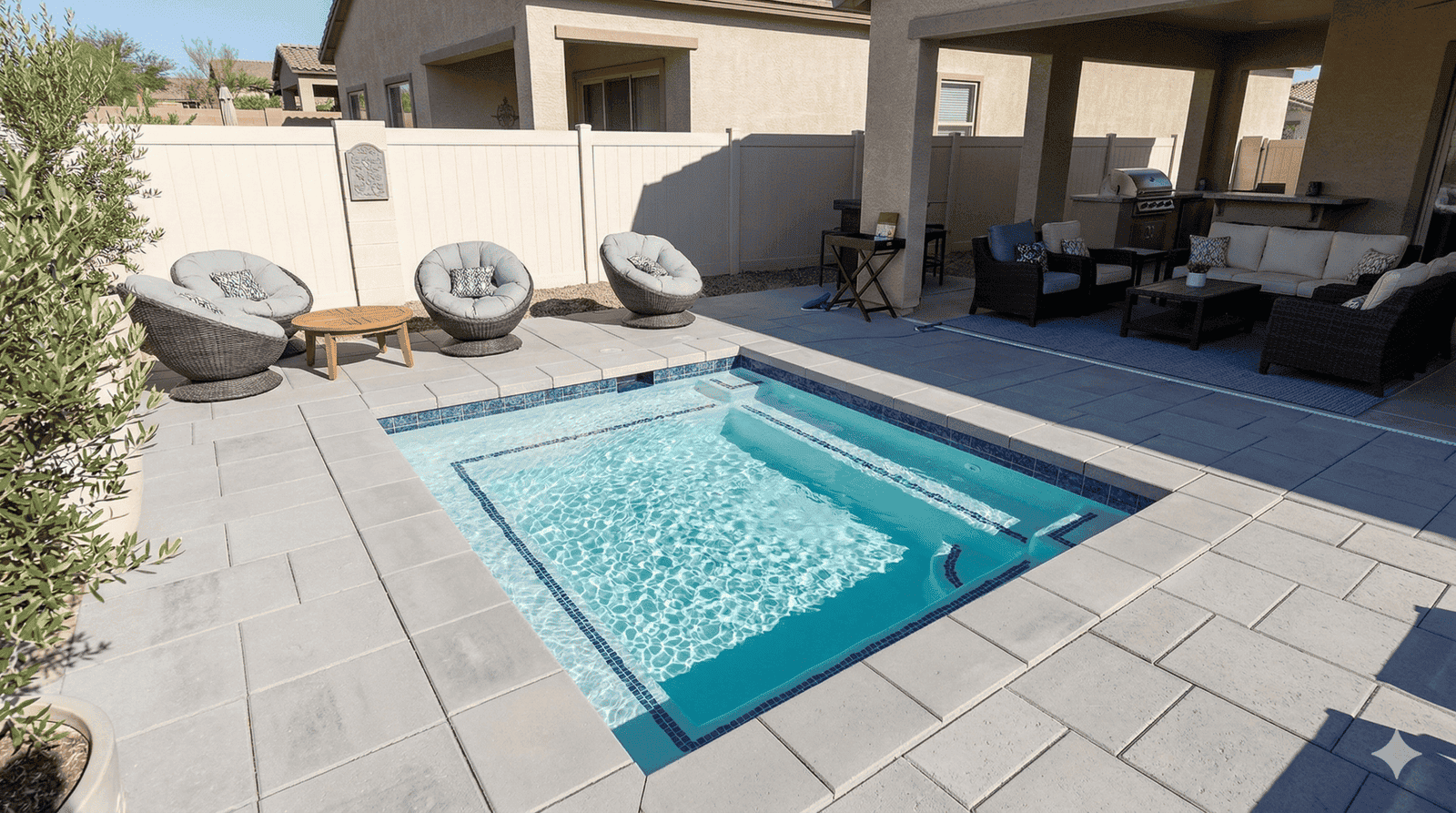
Same material, three stone sizes
Mini pebble, regular pebble and micro pebble
This decides how the pool feels under your feet, and it is worth more thought than most people give it.
Regular pebble
The largest aggregate. It gives you that natural riverbed look, the most texture and the most visible stone. It is also the roughest of the three underfoot.
Right for: a pool you swim in rather than stand in, a natural or rock-feature backyard, and grown feet.
most texture
Mini pebble
Smaller stone, noticeably smoother, and by far the most popular choice in Southern California. You still get the depth of color and the stain resistance, without the surface that reminds you it is there.
Right for: almost everybody. This is what we install most.
the usual choice
Micro pebble
The finest aggregate, closest to the feel of plaster while still being a pebble finish. The smoothest option if texture is the thing holding you back.
Right for: pools with kids in them daily, shallow ends people stand around in, and anyone who has had a rough surface before and did not like it.
smoothest
If you have small children, say so at the estimate. Kids spend their time standing and sitting on the steps and the shallow end, not swimming laps, and that is exactly where a coarse finish gets noticed. It is not a reason to avoid pebble — it is a reason to go mini or micro rather than regular.
There is also a middle road nobody offers unprompted: a smoother finish on the steps and the bench, and the regular aggregate everywhere else. Ask us about it if the texture is your only hesitation.
And if the steps themselves are the problem — nowhere to sit, nowhere to stand — that is a different job that is far cheaper done in the same project than two years later.
The fourth finish
QuartzScapes: smooth like plaster, tough like pebble
The option most people have never been shown, and the one that settles the argument for a lot of families.
Quartz is plaster with crushed quartz crystal blended into it. Quartz is one of the hardest minerals there is, so the surface ends up considerably harder and more stain-resistant than plain plaster — while staying smooth underfoot, because the crystal is ground fine rather than left as stone.
That combination is exactly what people are looking for when they say the two things we hear most at an estimate: “I want it to last, but I do not want it rough.”
It also holds its colour. Coloured plaster mottles within two or three years in this climate — the pigment sits in the cement and the cement is what the water attacks. In a quartz finish the colour is carried in the crystal itself, so it stays where it is.
And it sits between plaster and pebble on price. Harder and longer-lasting than plaster, gentler on the budget than pebble. For a lot of pools it is simply the right answer, and we bring samples of it to every estimate whether you asked for it or not.
The one thing pebble still does better is depth of water colour, because there is visibly more stone across the surface. If the deep blue is what you are after, that is pebble. If smoothness and a surface that holds up are what you are after, that is quartz.
Where each one wins
- Smoothest underfoot — quartz
- Longest life — pebble
- Deepest water colour — pebble
- Holds its colour without mottling — quartz
- Kinder on the budget — quartz
- Least exposed cement to stain — pebble
We install both, and we will tell you which one fits how your family actually uses the pool rather than which one costs more.
The actual mechanism
Why a pebble finish stains less than plaster
It is not a coating and it is not a sealer. It is simply less cement on the surface.
What stains in a pool is the cement, not the stone. Plaster is a thin layer of cement with fine marble dust in it, and cement is porous — as it wears, it opens up and holds onto everything the water carries. Calcium, iron, copper, dirt, the residue of every algae bloom the pool ever had. That is why an eight-year-old plaster pool has a grey shadow in the deep end that no amount of brushing takes out.
A pebble finish puts stone across most of that surface area. The cement is still there, holding the stone in place, but there is far less of it exposed to the water. Less exposed cement means less to stain, and it means the surface wears down much more slowly.
That is the whole mechanism. Anybody selling you a pebble finish as stain-proof is overselling it — a pebble pool with neglected chemistry will still scale and still discolor. What it buys you is a much wider margin for the ordinary swings that happen in every real pool.
The same property is why pebble lasts longer. It is not a tougher chemical; there is just less of the soft part.
What pebble does and does not fix
- Does: resist the staining that comes with ordinary chemistry swings
- Does: hold its color years longer than colored plaster
- Does: push your next resurfacing out by five to eight years
- Does not: survive genuinely neglected water chemistry
- Does not: fix a crack or a structural problem in the shell
- Does not: remove the need for the two-week start-up after we fill it
What it costs
How much a pebble, StoneScapes or quartz finish costs
We quote by linear feet of perimeter — the distance around the edge of your pool, not square feet and not gallons. It is the only unit that matches the work, which is also why we measure before we price.
What a pebble finish starts at
From $10,500
Demolition and a mini pebble or StoneScapes finish on a typical pool starts around $10,500 — the old surface chipped out and hauled away, the shell prepared, the finish installed and the exposure wash done. Quartz sits between that and plaster, and regular white plaster starts around $7,800.
So the gap between plaster and pebble is usually a few thousand dollars — and that difference buys you the eight-to-twelve-year cycle turning into fifteen to twenty. The people who choose pebble are not buying looks. They are buying not doing this again so soon.
These are approximate starting figures for orientation only. They are not a quote and they are not a price promise. We do not publish a rate per foot, because the honest answer is that it is not the same in every city — and a number on a web page that turns into a different number at your house helps nobody. You get one fixed number in writing after Oscar has come out and measured it, free, and it does not move afterwards.
Financing is available, and on this page it matters more than on most. If the budget is the only reason you are leaning toward plaster, ask us about financing before you decide rather than after. Plenty of people end up with the finish they actually wanted simply because they asked early.
Is pebble worth the difference over plaster?
If you are staying in the house, usually yes. Plaster gives you eight to twelve years. Pebble gives you fifteen to twenty. If the upgrade costs you a few thousand today and buys five to eight extra years before you do this again, the arithmetic is straightforward — and it does not count the years of better-looking water in between.
If you are selling within a couple of years, usually no. A well-done plaster pool shows beautifully, and you will not get the pebble premium back at closing. We will tell you that at the estimate even though it is the cheaper job for us.
And if your budget only reaches plaster, take the plaster. A properly chipped-out plaster job done right beats a pebble job you had to stretch for. We would rather do good work within your number than talk you into a finish that makes the whole project uncomfortable.
Why the rate is not the same in every city
Access is the biggest factor — a backyard we can reach with a truck is a different week of work than one where every load of old surface leaves through a side gate by hand. Beyond that, tile and stone cost more in some markets than others, some cities have their own rules about discharging the drained water, and the drive matters when a crew is on your property for a week.
A contractor who gives you a flat per-foot price over the phone without asking where you live is either quoting high to protect himself or will find a reason to revise it later.
The step that separates a good job from a blotchy one
The exposure wash, and why it decides how your pool looks
There is one step in a pebble job that does not exist in a plaster job, and it is the one that decides whether the finish looks right.
When a pebble finish goes on, the stone is not visible. It is buried in cement. What makes it a pebble pool is what happens next: the surface is washed back to expose the stone, and there is a window of a few hours when that can be done correctly.
Too early and the cement has not set — the wash pulls stone out of the surface and leaves thin, weak patches that show up as texture differences forever. Too late and the cement has gone hard — the stone never comes out properly, the finish looks cloudy and flat instead of showing its color, and there is no fixing it afterwards.
Getting it right is a judgement call made on the day, by someone who has done it before, reading how a specific batch of material is behaving in that day’s heat. It is not on a schedule and it cannot be handed to whoever is available.
This is the honest reason we do not sub out pebble work. The crew that mixes it is the crew that watches it, and Oscar is there for the wash on every job. When you see a pebble pool that looks patchy in one corner, that corner is almost always where this step went wrong.
What a good exposure looks like
- Stone density that reads the same from the steps to the deep end
- No cloudy or cement-heavy patches
- No bare spots where aggregate was washed out
- An even color across the whole shell once it fills
- A consistent feel underfoot, wall to wall
We walk the empty pool with you before the fill starts, so you see the surface dry and can raise anything you do not like while it is still fixable.
What happens, in what order
How a pebble finish job goes
Five steps. You hear from Oscar on every one of them.
Step 1
Measure and choose the color
Free, at your house. We measure the perimeter, bring samples you can hold, and point you to a finished pool nearby in the color you are leaning toward.
Step 2
Fixed price in writing
The exact product, the stone size, the color, the tile and coping if you are doing them, and what is not included. You keep a copy. Ask about financing here, before the scope is locked.
Step 3
Drain, chip out, prepare
The old surface comes off and leaves in our truck. If the shell underneath needs work you see a photo and approve it before we go on.
Step 4
Pebble on, then the exposure
The finish goes on in one continuous application, and the exposure wash happens the same day at the right moment. We walk the dry pool with you afterwards.
Step 5 — fill and start-up
We start the fill the same day and do not stop it, then walk you through the first two weeks: brushing, chemistry, and when you can swim. A new pebble surface is curing while the pool fills, and that fortnight does more for how long it lasts than anything else you will ever do to it.
If you have a weekly pool service, tell us who. We will talk to them directly about the start-up, because a pool tech treating a two-day-old pebble surface like a normal pool can undo the entire job without knowing it.
How long you are without the pool
Chip out and pebble only: about one week. That is the straightforward job.
With new tile, new coping, or a permit: up to a month. Tile and coping add days of their own, and a permit timeline belongs to the county, not to us. We tell you which one yours is at the estimate.
Not sure a new finish is what your pool needs?
Some pools need the surface. Some only need the tile. There is a table on our services page that matches what you are seeing to what it usually is — including when the answer is that you do not need us yet.
Written guarantee on our workmanship
If something fails because of our workmanship within the first year, we come back and repair it. No cost, no argument — and it is in writing before we ever start, not promised verbally at the door.
Real work, real results
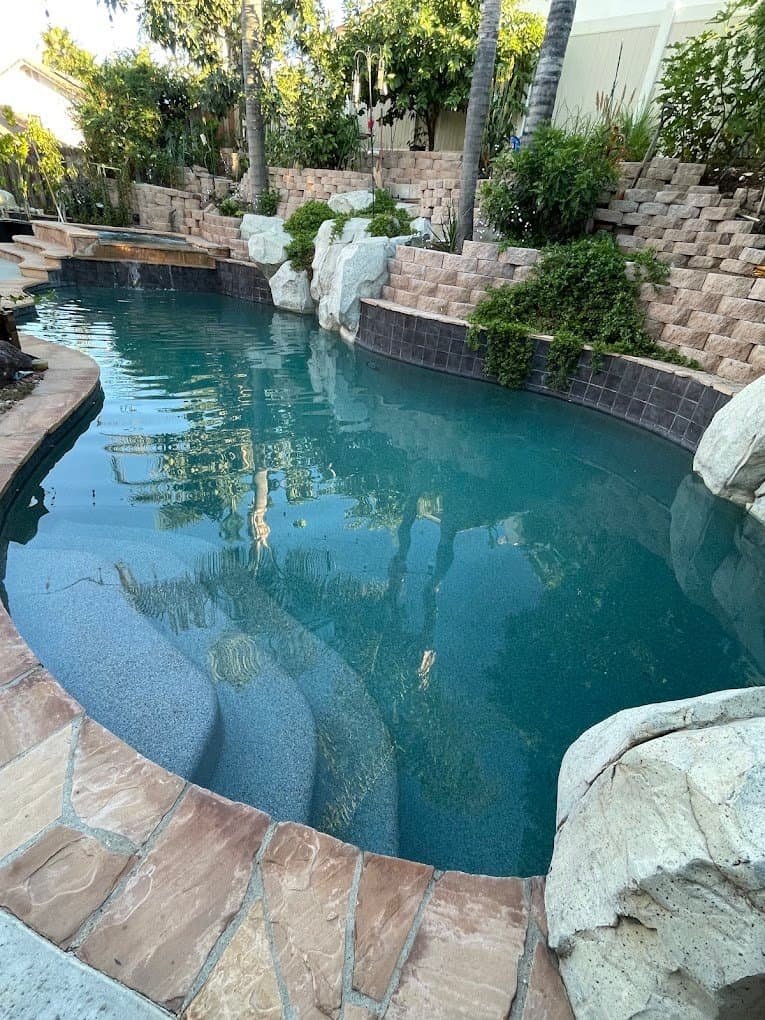
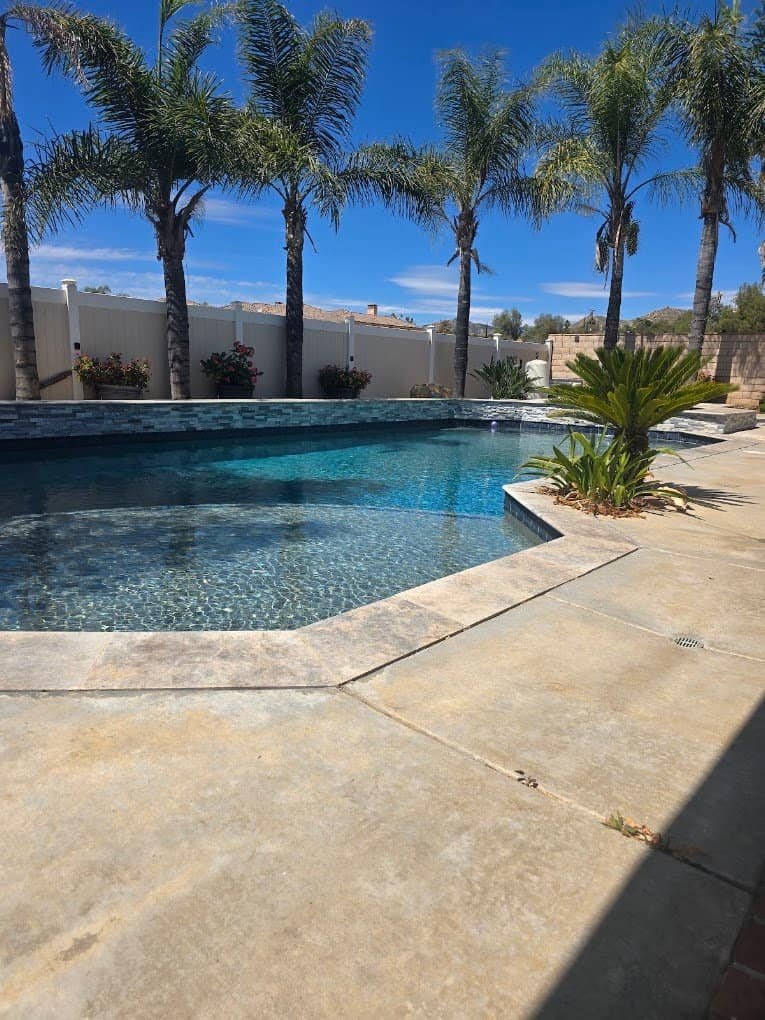
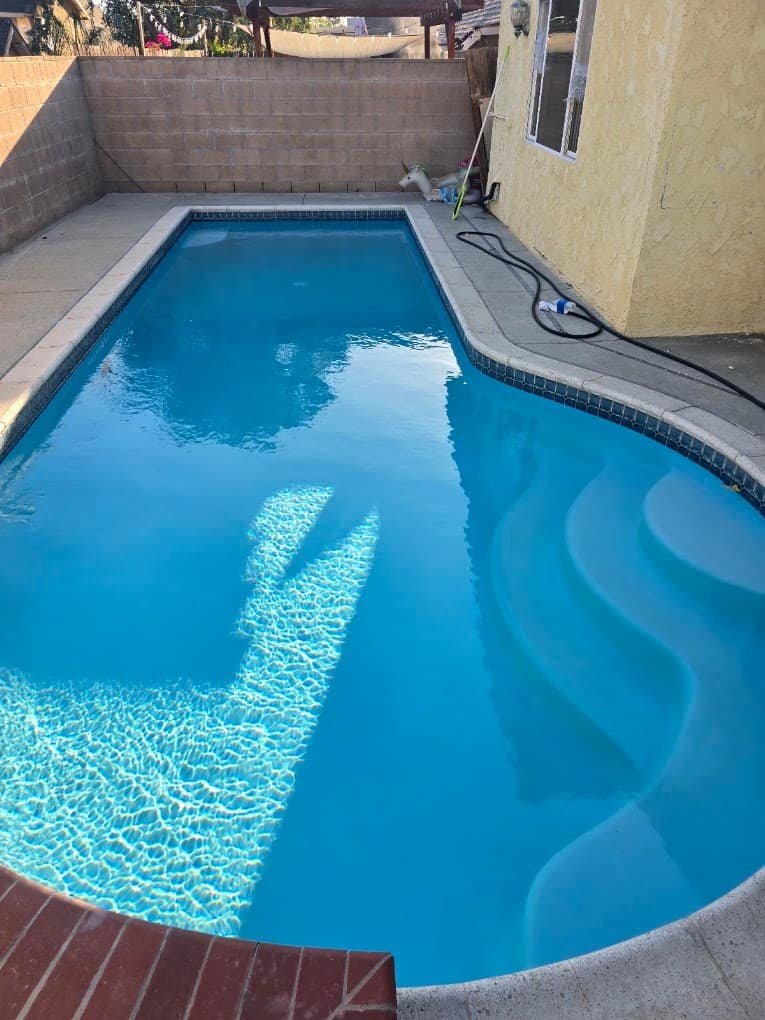
Recent pebble and resurfacing work
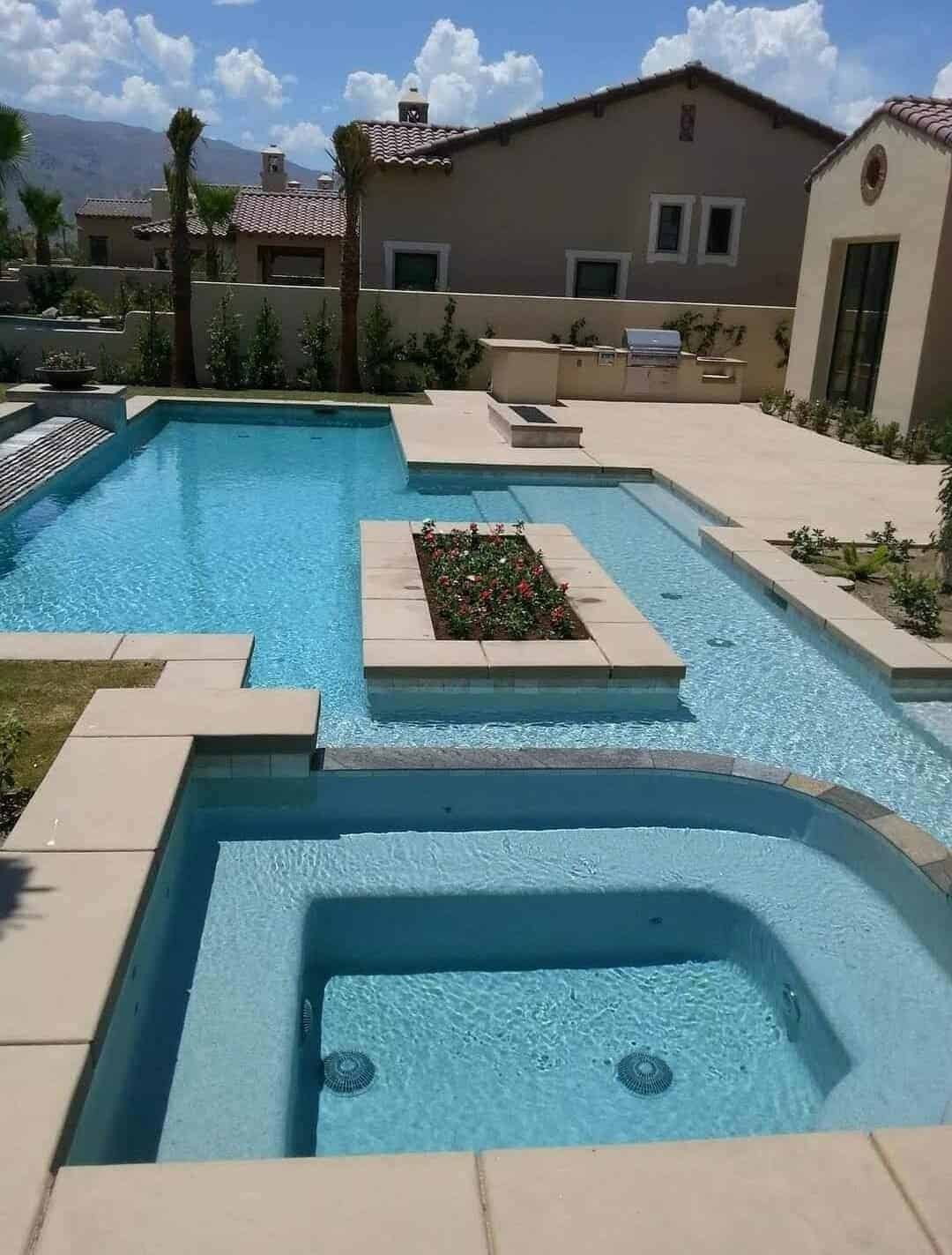
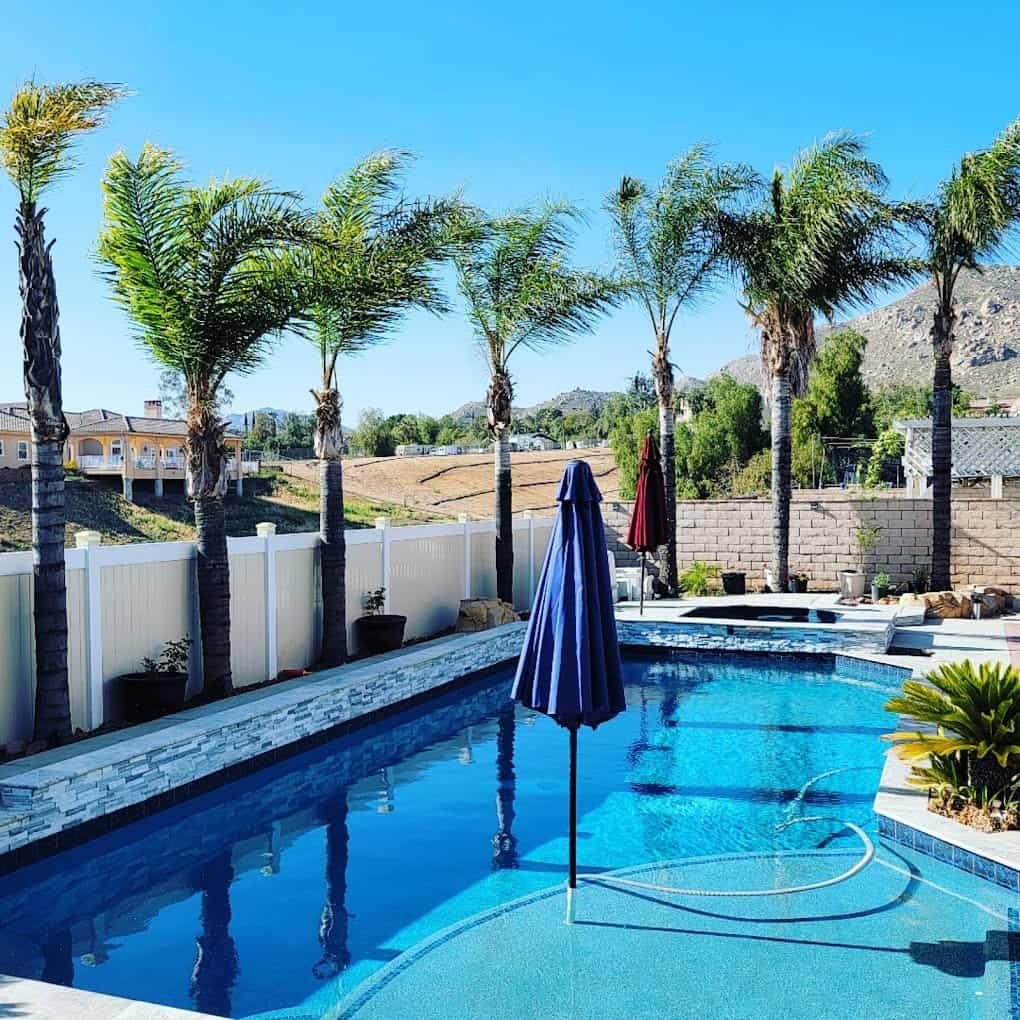
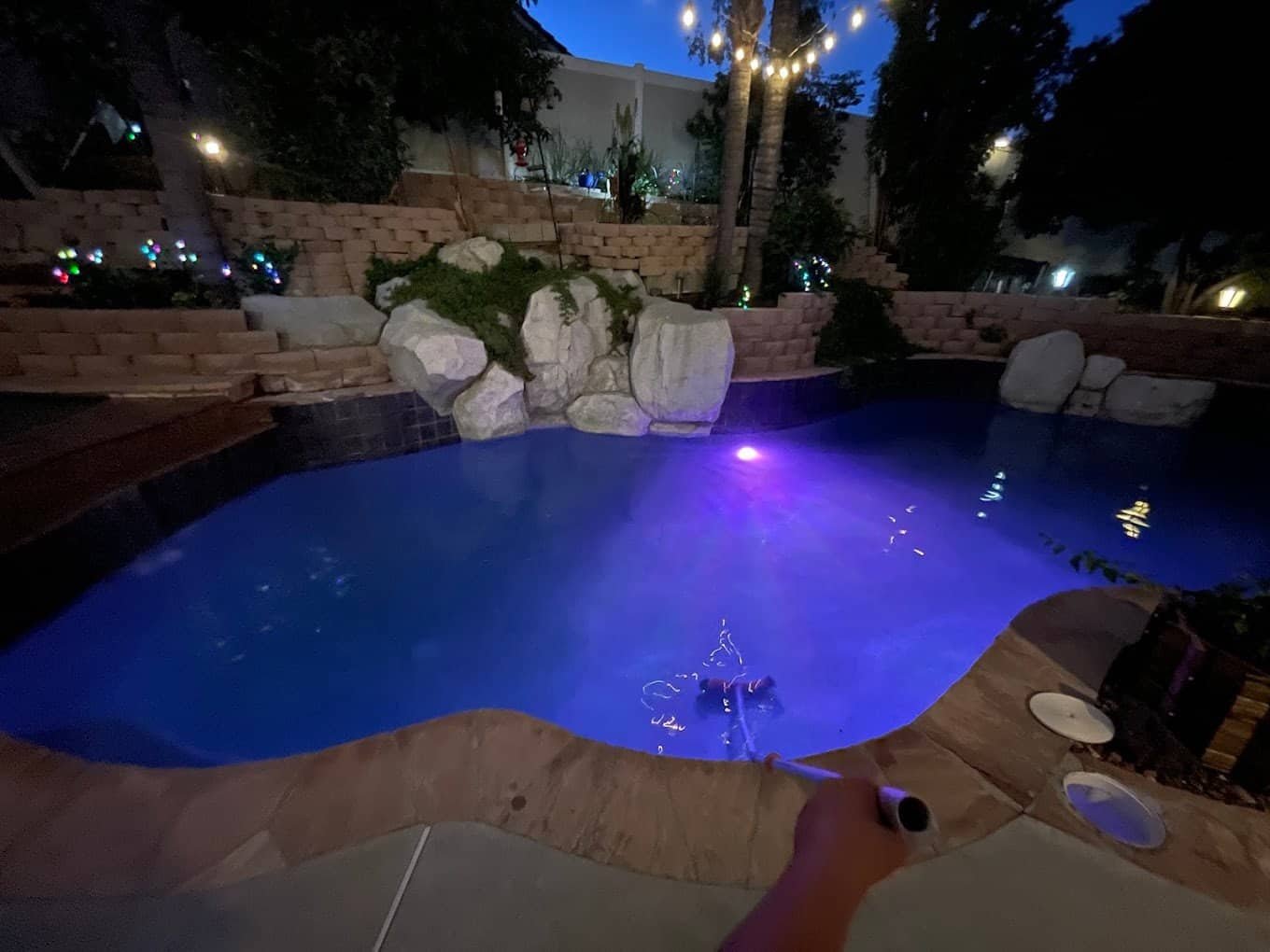
No stock photography — every project shown here is one of ours, in a real backyard around the Inland Empire.
off your first remodeling or new construction project
For every new customer, on top of whatever the quote already says — your first pool remodeling or new pool construction project with us. Veterans and active-duty military, always. And ask about financing while you are at it. Just mention it when you call.
Where we work
Pebble and StoneScapes finishes in Riverside, San Bernardino, Orange, Los Angeles and San Diego counties
We are based in Riverside County and we install pebble finishes across five counties. Most of these are pools built between the late seventies and the nineties, on their second plaster job at best — which is exactly the point where upgrading to pebble stops being a luxury and starts being the cheaper decision.
Riverside County
Riverside, Hemet, Murrieta, Corona, Moreno Valley, Temecula, Menifee, Perris, Lake Elsinore, Eastvale
San Bernardino County
Redlands, Rancho Cucamonga, Ontario, Fontana, Chino Hills, Upland, Rialto, Highland, Yucaipa
Orange County
Anaheim, Irvine, Orange, Yorba Linda, Fullerton, Tustin, Brea, Villa Park
Los Angeles County
Pasadena, Glendora, Whittier, Claremont, San Dimas, La Verne, Arcadia, Covina
San Diego County
Carlsbad, Oceanside, Vista, San Marcos, Escondido, Encinitas, Fallbrook
Before you pick a color
Pebble finish questions we get asked
The first four are the ones Google itself shows when you search pebble and StoneScapes finishes in Southern California.
What is the lifespan of a PebbleSheen pool finish?
PebbleSheen is the smaller-stone line from Pebble Technology International, and the figure generally quoted for it is twenty to twenty-five years. That is the manufacturer’s range and what most installers will tell you.
Treat any of these numbers as what you get with reasonable water chemistry, not as a guarantee. The same finish in a pool that swings between acidic and scaling for a decade will not reach the top of that range, and a well-kept pool will often pass it.
For comparison, StoneScapes finishes — which are what we install — are generally quoted at fifteen to twenty years and up, against eight to twelve for standard plaster.
Which PebbleTec finish is best?
There is no best one; there is a right one for how you use the pool. The three lines are the same idea at three stone sizes. PebbleTec is the original and the coarsest, with the most natural riverbed look. PebbleSheen is smaller and noticeably smoother. PebbleFina is the finest of the three and the closest to plaster underfoot.
The question that actually decides it is who is in the pool. Households with small children who stand on the steps for hours almost always want the smoother end. A pool that is swum in rather than stood in can carry the coarser one comfortably.
The same logic applies to what we install: StoneScapes comes in regular, mini and micro pebble, and mini is what most Southern California families end up choosing for exactly this reason.
How much does it cost to resurface a pool with Pebble Tec?
Pebble finishes generally run a few thousand dollars more than standard plaster on the same pool, and the PebbleTec brand sits at the premium end of that.
Because the work is on the walls and floor, we quote by perimeter rather than by gallons. Demolition and a mini pebble or StoneScapes finish on a typical pool starts around $10,500 — the old surface chipped out and hauled away, the shell prepared, the finish installed and the exposure wash done. Quartz sits between that and plaster, and regular white plaster starts around $7,800.
Your number comes after Oscar has seen the pool, because the city, the condition of the shell and how we get into the yard all move it. That visit is free and the price is fixed in writing. Financing is available if the difference between plaster and pebble is what is holding the decision up.
Which pool finish is better, quartz or pebble?
They solve slightly different problems, so the honest answer depends on what is bothering you about your current pool.
Quartz is plaster with quartz aggregate blended in. It is harder and more stain-resistant than standard plaster, it holds color better, and it stays smooth underfoot. It costs less than pebble. If your priority is a smooth surface that outlasts plain plaster, quartz is the sensible pick.
Pebble puts far more stone across the surface, so there is less exposed cement to stain and to wear. It lasts longer than quartz, gives the water more depth of color, and carries more texture.
Roughly: choose quartz if smoothness matters most, and pebble if longevity matters most. We install both and we will tell you which one fits how you actually use the pool, rather than which one costs more.
What is the difference between PebbleTec and StoneScapes?
Different manufacturers and different material. PebbleTec is made by Pebble Technology International from naturally tumbled river stone. StoneScapes is made by National Pool Tile from quartz and natural pebble blended into white Portland cement.
In practice PebbleTec is the premium product with the longer quoted life, and StoneScapes is the durable finish at a price far more Inland Empire pools can actually reach. Both are enormous improvements over plaster.
The important part for you is that “pebble finish” on a quote does not tell you which one you are getting. Ask for the manufacturer and the product name in writing before you sign anything.
Do you offer financing?
Yes. Ask about it when you call and we will walk you through the options.
On this job in particular it tends to change the decision. The gap between plaster and pebble is usually a few thousand dollars, and that gap buys five to eight extra years before the pool needs doing again. Plenty of people end up with the finish they actually wanted simply because they asked the question before choosing, not after.
Is a pebble finish rough on your feet?
Regular pebble, somewhat — it is the coarsest option and you notice it. Mini pebble, much less. Micro pebble, barely at all.
The honest way to decide is to think about where people actually stand. Swimming across a pool, nobody notices the finish. Sitting on the steps for an hour, or a child standing in the shallow end all afternoon, is where texture gets remembered.
If this is your hesitation, tell us. There is also the option of a smoother finish on the steps and bench with the standard aggregate everywhere else, which nobody offers unless you ask.
How do I know what color the water will be?
Not from the sample. A four-inch dry chip under a showroom light is a poor predictor of twenty thousand gallons of water in an open backyard, and this is the number one regret we hear about pebble jobs.
The same finish reads several shades apart between your shallow end and your deep end, because depth does half the work. It shifts again with what surrounds the pool and again with the time of day.
Go look at a finished pool in that color, in daylight, in person. We will tell you where one is. It costs us a phone call and it is the difference between being happy on fill day and being quietly disappointed for fifteen years.
Do I need a certified applicator?
Both major manufacturers require installer certification for their factory warranty to apply, so if that warranty matters to you, yes — and you should ask for proof of it rather than take a website’s word.
Ask every contractor who quotes you, us included, for three things in writing: which exact product is going in your pool, who makes it, and what warranty comes with it. A contractor who cannot answer those in one sentence has not decided yet.
Separately from any manufacturer warranty, we give you our own written one-year warranty on the work, and you can verify our California license — CSLB #1148412 — at cslb.ca.gov in about thirty seconds.
Can I put a pebble finish over my existing plaster?
No, and you should be cautious about anyone who offers to. Pebble goes onto a prepared shell, not on top of an old surface that is already at the end of its life. The old plaster comes out first.
That is part of why a pebble job costs what it does — the demolition, the hauling and the prep are real work. It is also why the result lasts fifteen to twenty years instead of two or three.
Should I do the tile and coping at the same time?
Usually yes, and the reason is sequence rather than sales. The waterline tile has to come off for the prep anyway, so replacing it now costs a fraction of what it costs as its own project. And the tile and coping go in before the interior finish, because the pebble finishes against them.
Which means doing the tile two years from now requires draining the pool again and cutting into a surface you just paid for. If it is on your list at all, this is the moment.
If the tile and the coping are both tired, that is a complete remodel rather than a resurfacing, and it is quoted as one project.
Is the work guaranteed?
Yes — a written one-year warranty on the finish, handed to you with the paperwork rather than promised verbally.
We are a licensed California contractor, CSLB #1148412. Look that number up at cslb.ca.gov and check the status yourself. We would encourage you to do that with every contractor who quotes you, including us.
¿Hablan español?
Sí. Oscar y su equipo hablan español. Llame, escriba o mande fotos en el idioma que prefiera y le contestamos en el mismo.
Get your free pebble finish estimate
Tell us roughly how big the pool is and which colors you are drawn to. We will bring the samples, tell you where to go see one of them full of water, and put a fixed price in writing. Ask about financing while you are at it.