
Somewhere to stand
Pool Depth Modification in Southern California
Baja shelves, shallow-end conversions and depth changes across five counties. Most people who call about this think they need a full structural rebuild. Often they do not — and this page explains, in public, which of the three levels of this work you actually need.
(951) 419-4206Free estimates. Financing available. Licensed — CSLB #1148412.
Run by Oscar Retana, twenty-one years on Southern California pools, with his sons on the same crew. Fixed price in writing before anything is opened up.
Where we work most: Riverside, Redlands, Hemet, Murrieta, Corona and Anaheim — and across five counties: Moreno Valley, Temecula, Menifee, Rancho Cucamonga, Ontario, Fontana, Chino Hills, Irvine, Orange, Pasadena, Glendora, Whittier, Carlsbad, Oceanside, Vista and everywhere in between.

Oscar Retana and his sons — the crew that will be in your backyard. CA’s Finest & Quality Pool Plastering Inc, Riverside County.
What people are really asking for
The eight-foot deep end nobody has used since 1994
“They tell me they want the pool shallower. Half the time what they want is to stand somewhere with their grandkids.”
Pools built through the seventies and eighties were built for diving boards. That meant a deep end of eight, nine, sometimes ten feet — and a hopper slope that eats most of the floor on the way there.
Then the diving board came off, the kids grew up, and what is left is a pool where there is nowhere to stand. The shallow end is crowded, the deep end is unused, and every party ends up in the same four feet of water.
Almost everyone who calls us about this asks the same question: how much to make it shallower. And a good share of the time, that is not the cheapest way to solve what is actually bothering them.
If the problem is “there is nowhere to sit or stand,” a shelf solves it for a fraction of what filling the deep end costs. If the problem is genuinely “this pool is too deep for my grandchildren,” then yes, the floor has to come up, and that is real structural work with a permit and an engineer. Those are two very different projects and two very different numbers, and you deserve to know which one you are looking at before anyone quotes you.
Oscar or one of his sons does that visit personally, it is free, and if the answer is the smaller job we will say so. And if the budget is what is holding it up, ask about financing — it is worth knowing the options before you decide on the scope rather than after.
Our testimonials
Real experiences. Real results.
Hear it from the people whose backyards we worked in. Then read the reviews straight from our Google profile, below.
A customer on how the job went, start to finish.
Another customer, another backyard in Southern California.
Real reviews from real clients
Every one of them written by somebody whose pool we worked on, in Riverside, San Bernardino, Orange, Los Angeles or San Diego county. Several are in Spanish, because a good share of our customers are.
We would rather you read them before you call us than after.
Three jobs sold under one name
The three levels of pool depth work
These get sold under one name and they are not remotely the same job. Knowing which one you need is worth more than any quote.
Level 1 — Adding a shelf or steps
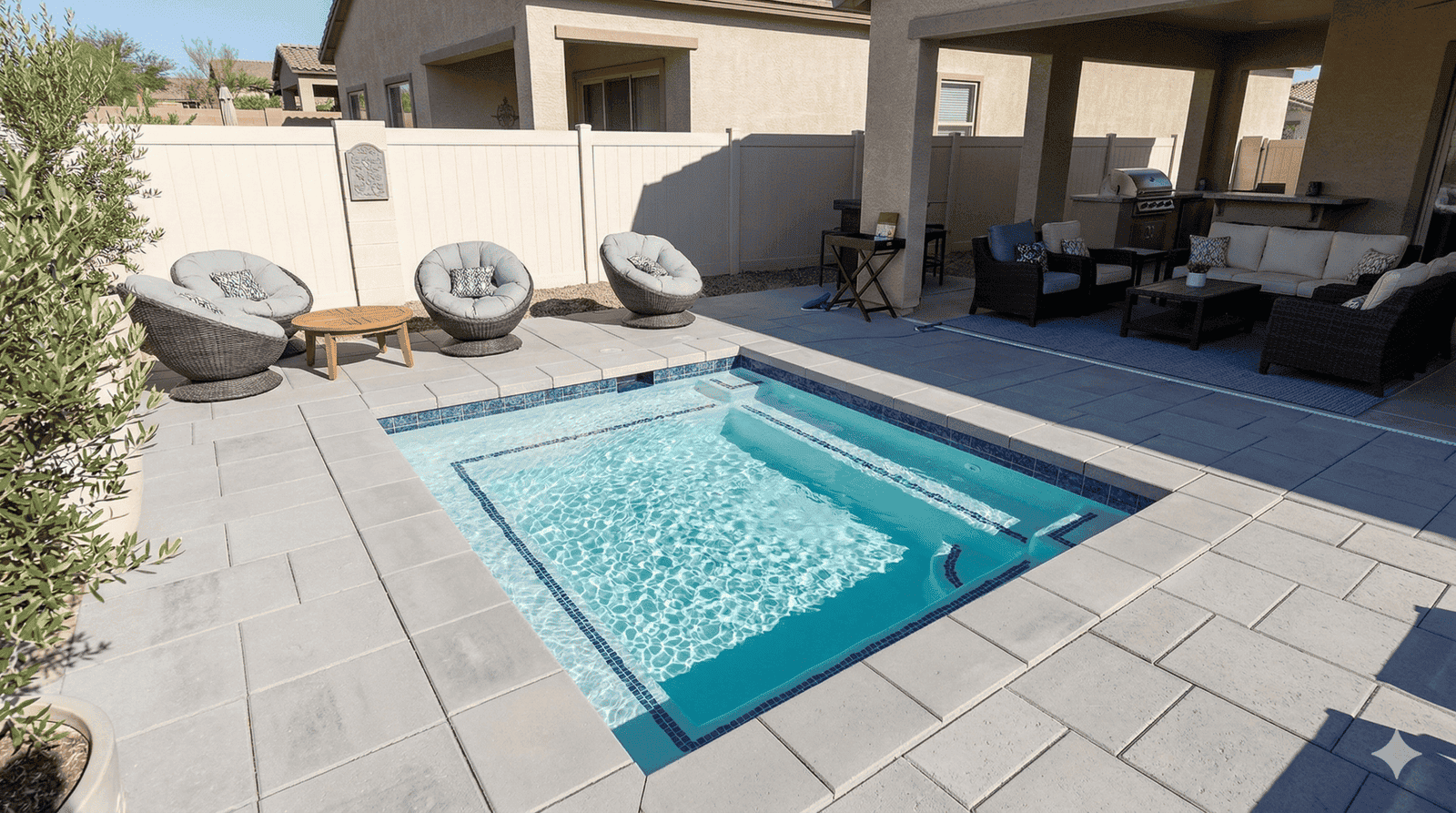
A Baja shelf, a tanning ledge, a bench, or extra steps built into the existing pool. The deep end stays exactly as it is. You gain somewhere shallow to stand, sit and put a chair.
This is structural work but it is contained: a formed and reinforced platform tied into the shell, then finished to match the rest of the pool.
This is what most people actually want, and it is the least expensive and fastest of the three by a wide margin.
most people need this one
Level 2 — Raising part of the floor
Bringing up a section of the deep end or flattening the hopper slope, without converting the entire pool. Compacted fill goes in, rebar is pinned into the existing shell, and new shotcrete is applied over it.
Common when the aim is to lose the steepest part of the slope so more of the pool is usable, rather than to change the pool’s character entirely.
the middle option
Level 3 — Full depth conversion
Converting a deep pool to a uniform shallower depth, or the other way round, making an existing pool deeper. The floor elevation changes across the whole pool.
This is engineering-heavy: structural plans, a permit, main drains reconfigured, inspections at multiple stages, and the whole interior refinished afterwards. Budget seven to ten weeks and a number that starts well above the other two.
real structural work
We do shelves, benches, steps and depth adjustments, and we quote those directly. For a full Level 3 conversion we will tell you honestly at the estimate whether it is our job or whether you want a structural engineer and a builder who does nothing else. We would rather send you to the right people than take on a job to find out halfway.
What we will not do is quote you Level 3 money for a Level 1 problem, which is the most common thing that happens to homeowners in this corner of the industry.
And if the floor is coming up anyway, this is the cheapest moment in the pool’s life to also deal with the interior surface, the tile and the coping — because the drain and the mobilization are already paid for. That combination is a complete remodel, and it is quoted as one project.
Not mirror images
Making a pool shallower, and making one deeper
They sound like opposites of the same job. In cost and difficulty they are not close.
Shallower is the common one. Fill material goes into the deep end and gets compacted in lifts, rebar is pinned into the existing shell so the new floor is tied to the old one rather than sitting loose on top of it, and new shotcrete is applied over that. Then the interior is refinished, because you cannot blend new surface into old and have it look like anything but a repair.
That is real work, but it is additive. Nothing structural gets removed.
Deeper is a different animal. The existing gunite shell has to be broken through, the ground underneath excavated, the steel reinforcement re-engineered, main drains and returns re-plumbed to suit the new geometry, and fresh shotcrete shot and cured before anything else happens.
It is genuinely more invasive, it costs substantially more, and it is the version where an engineer is not optional. If you are being quoted a deepening at a price that sounds like a replaster, something is missing from that quote.
There is one more reason shallower is more popular here than it used to be. A shallower pool holds less water, and in Southern California that shows up on a bill every month for the rest of the time you own the house.
What changes when the floor changes
- The main drains have to be re-plumbed to suit the new floor
- Water volume changes, so the circulation and chemistry change with it
- The whole interior gets refinished — new surface will not blend into old
- Tile and coping often come into the job, because the waterline moves
- Diving equipment comes off, if there is still any on the pool
None of these are extras we add on. They are consequences of changing the floor, and any quote that leaves them out is going to grow later.
The part that is not ours to promise
Permits, and why depth work is different
Changing the depth of a pool is structural work, and structural work goes in front of your building department.
The reason is that depth is not cosmetic. Changing the floor elevation changes how load is carried through the shell and changes the geometry of everything plumbed into that floor. That puts it in front of your city or county rather than in the hands of whoever shows up with a truck.
What that means in practice: structural plans get submitted, a plan check happens, and the work gets inspected at stages — typically the rebar and the shotcrete before anything covers them.
What exactly is required is a local question, and we do not guess at it on a web page. Requirements are not the same in every city, and they are not always the same for a house inside city limits and one in an unincorporated part of the same county. Some cities ask for a permit on work that other cities treat as a repair.
So the honest answer is the one we give at the estimate: we find out what applies to your address, in writing, before anything starts, and we handle the filing and the coordination.
What we will not do is tell you a permit is unnecessary so the job looks faster on paper. That is how people end up unable to sell a house because there is unpermitted structural work in the backyard.
Ask this of every quote you get
- Does this work need a permit at my address?
- Who pulls it, you or me?
- What is your estimate for plan check, in writing and separate from the construction timeline?
- Which stages get inspected?
- What happens to the main drains?
A contractor who waves the permit question away is not saving you time. He is moving a risk from his side of the table to yours.
The shortcut that causes problems later
Main drains, and why the floor cannot simply be poured over
This is the part that separates a proper depth conversion from a fill job that comes back to bite you.
At the bottom of your deep end are the main drains. They are part of how the pool circulates, and they were placed where they are because that is the lowest point of the floor as it was built.
When you raise the floor, that stops being true. The drains have to be re-plumbed and repositioned to suit the new geometry, so that the pool still circulates the way it is supposed to and so that the suction fittings end up where they belong on the new floor.
Burying a main drain under fill and leaving the plumbing dead is not a shortcut, it is a defect. It changes how the pool circulates, it leaves abandoned pipe under a structural floor, and it is the kind of thing that surfaces during a home inspection years later — at which point it is somebody’s problem to open the floor again.
The same applies to returns and to any floor cleaning system. If the geometry of the floor changes, everything plumbed into that floor has to be addressed with it. When we quote a depth change, that work is in the number rather than discovered afterwards.
It is also worth asking any contractor what they plan to do with the drains before you compare prices. A quote that is cheaper because it skips this is not cheaper. It is the same job with a problem buried in it.
What it costs
How much pool depth modification costs
The figures you will find published for this work are usually describing the biggest version of the job. Here is the honest breakdown by level, so you know which project you are actually asking about.
| What you are having done | How it is priced |
|---|---|
| Baja shelf, bench or added stepsLevel 1 — deep end untouched, formed and finished to match | quotedafter we see it |
| Raising a section of the floorLevel 2 — compacted fill, pinned rebar, new shotcrete over part of the pool | quotedafter we see it |
| Full depth conversionLevel 3 — engineered plans, permit, drains re-plumbed, whole interior refinished | quotedsubstantially higher |
| Making an existing pool deeperShell opened, excavation, steel re-engineered, new shotcrete | quotedthe most involved |
| New interior finish afterwardsAlways part of a depth change — new surface will not blend into old | quotedwith the project |
We do not publish prices for depth work. It varies more than any other service we offer, because it depends on your shell, your soil, your city’s plan check, and how much of the floor is changing. You get one fixed number in writing after Oscar has come out and seen it — free, and that number does not move afterwards.
Why you will see much bigger numbers published
The figures commonly published for this category across Southern California are high.
Those numbers are real — they describe Level 3: a full engineered conversion with plan check, permit, drains re-plumbed, weeks of structural work and a complete refinish. If that is genuinely your project, budget accordingly and be suspicious of anyone quoting a fraction of it.
But a lot of people reading those numbers only need Level 1 — a shelf so there is somewhere to stand. That is a different, smaller project, and we quote it as one.
Financing is available. Ask about it when you call. It is worth knowing the options before you decide which level you are doing, because what is possible sometimes changes the answer — and doing the surface and the tile in the same project is far cheaper than coming back for them later.
How long it takes
A shelf, bench or steps: usually one to two weeks, including the finish work.
A full structural conversion: seven to ten weeks of work, and realistically longer from start to swimming once you account for demolition, shotcrete curing, tile, coping and the final finish. Shotcrete needs its cure time and that is not a step anyone can compress.
Add the plan check on top of that. How long your city takes to review structural plans is not something any contractor controls, and anyone promising you a date that depends on a building department is promising you something that is not theirs to promise.
What happens, in what order
How a depth modification job goes
Four steps, and the first one is the one that saves people the most money.
Step 1
We work out which level you need
Free, at your house. We measure, look at the shell and the slope, and ask what is actually bothering you about the pool — which is often not what you called about.
Step 2
Plans and permit, if it needs them
We find out what applies at your address, handle the filing, and give you the plan check estimate in writing separate from the construction timeline. Ask about financing at this point, before the scope is locked.
Step 3
Structure
Fill compacted in lifts, rebar pinned into the existing shell, drains re-plumbed where the floor changes, then shotcrete — with inspections at the stages your jurisdiction requires.
Step 4
Finish, fill and start-up
Interior refinished across the whole pool, tile and coping if the waterline moved, then the fill and the two weeks of brushing and chemistry that make a new surface last.
Not sure the depth is really the problem?
Sometimes what bothers people about a pool turns out to be the surface, or the tile, or the steps. There is a table on our services page that matches what you are seeing to what it usually is — including when the answer is that you do not need us yet.
Written guarantee on our workmanship
If something fails because of our workmanship within the first year, we come back and repair it. No cost, no argument — and it is in writing before we ever start, not promised verbally at the door.
Real work, real results
Recent work around the Inland Empire
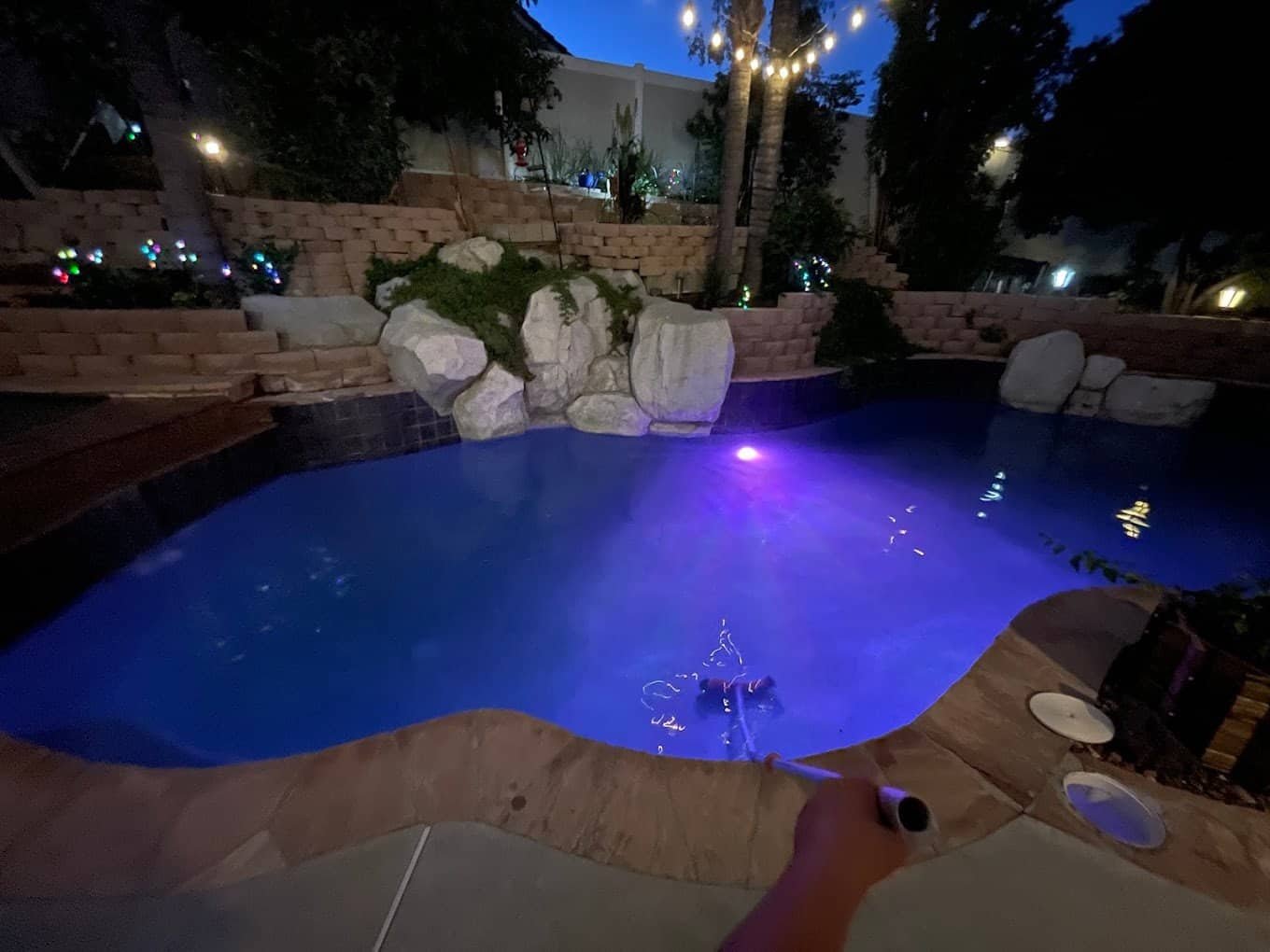
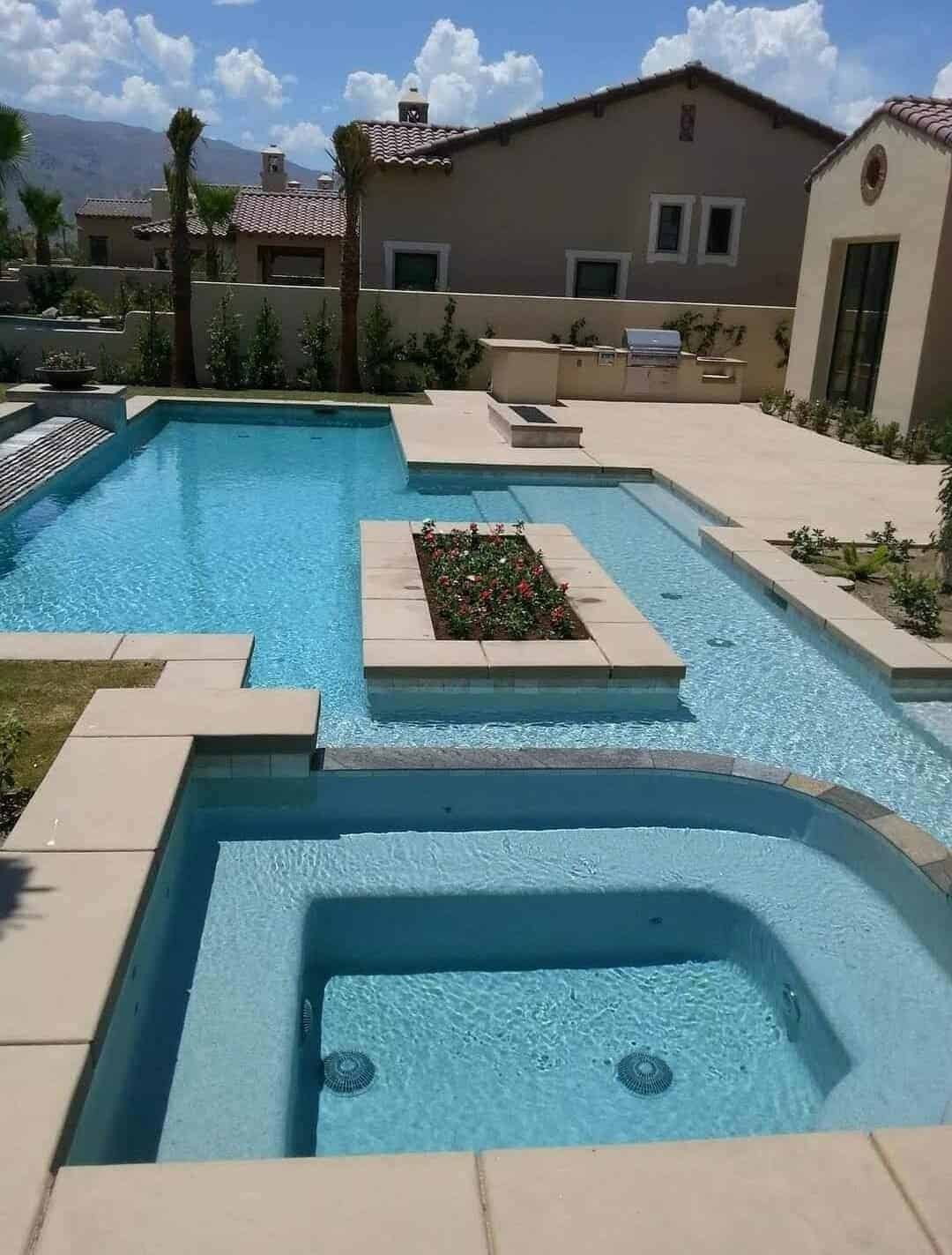
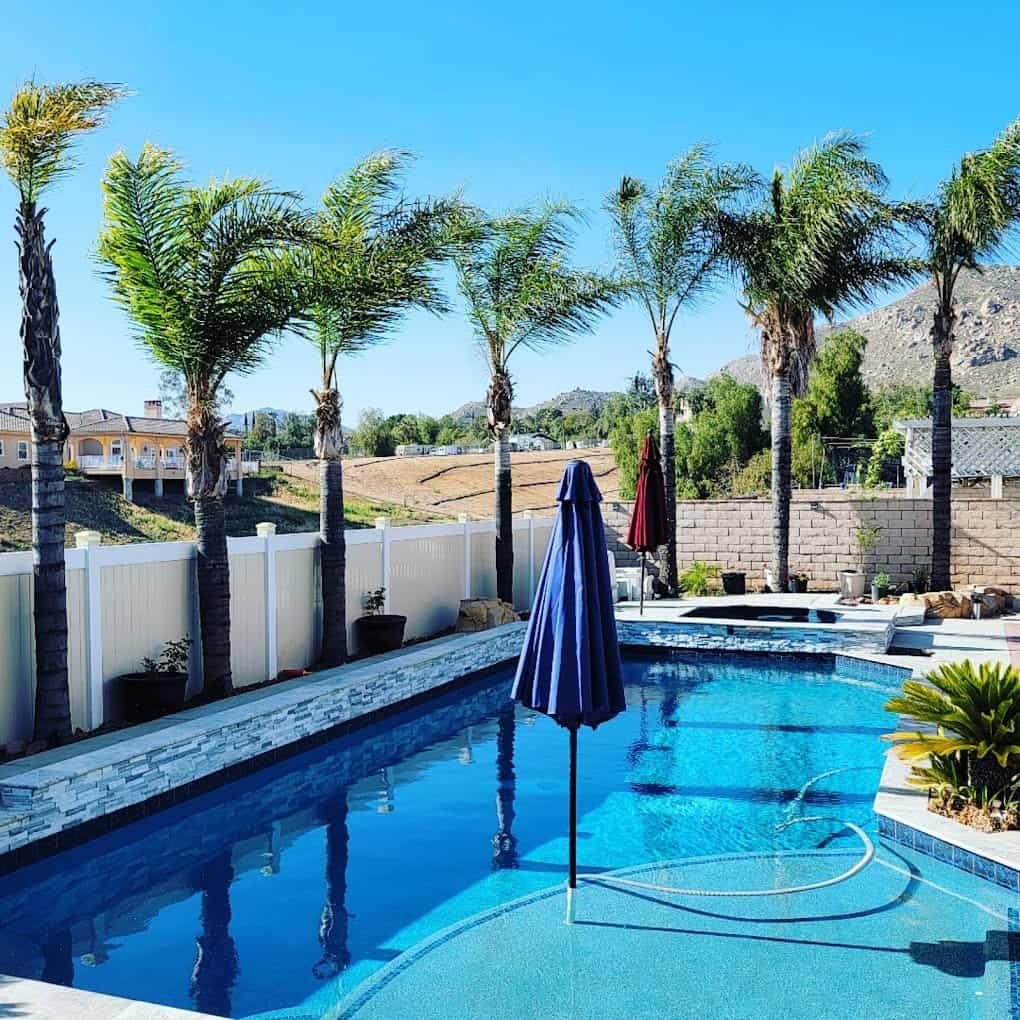
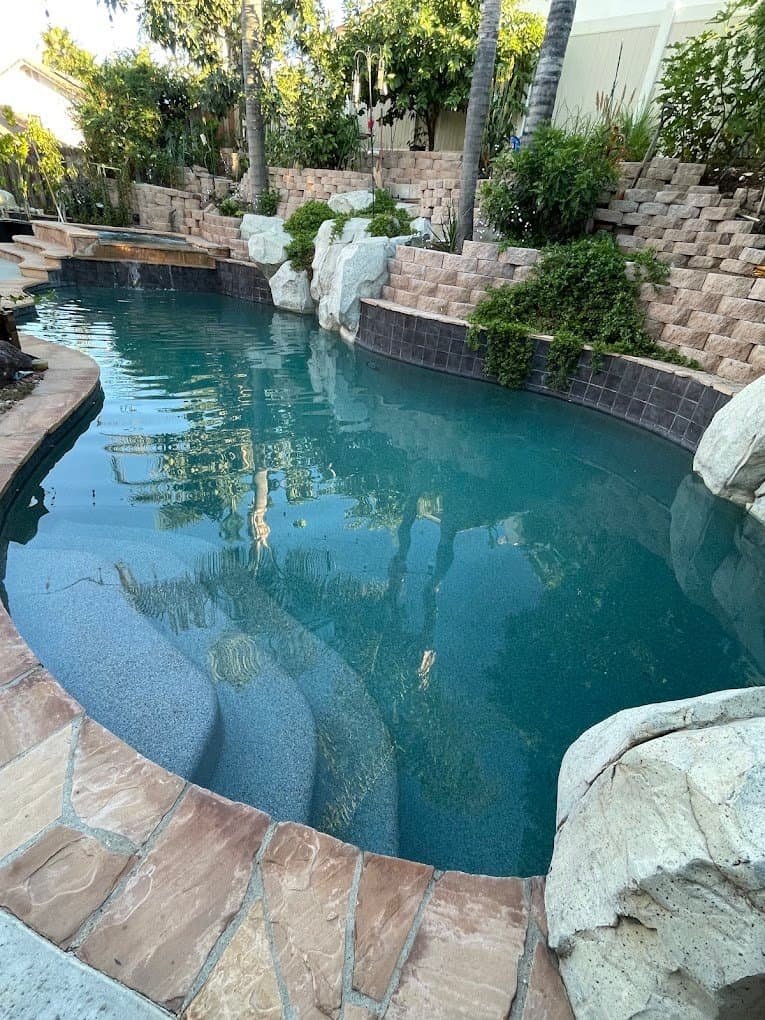
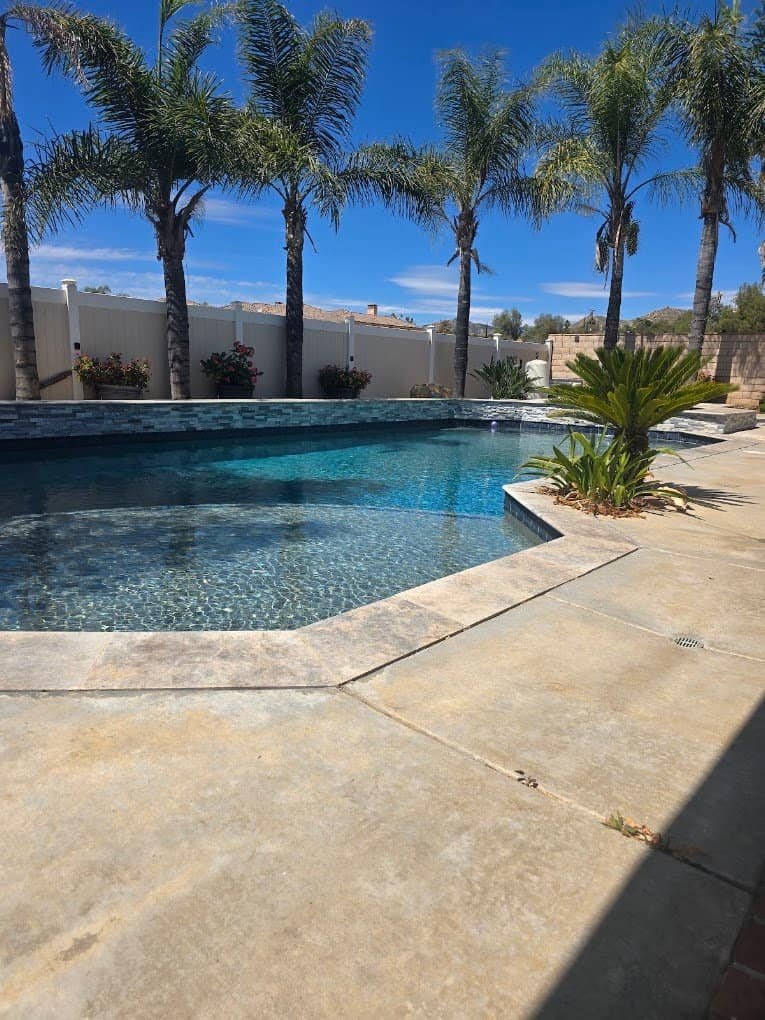
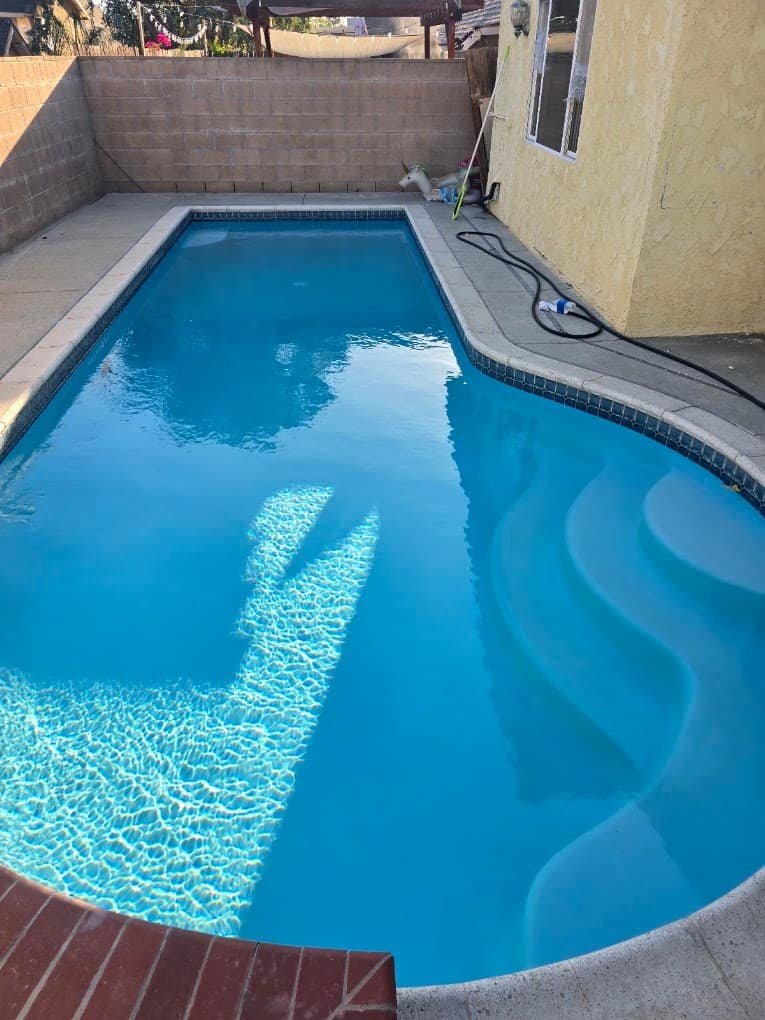
No stock photography — every project shown here is one of ours, in a real backyard.
off your first remodeling or new construction project
For every new customer, on top of whatever the quote already says — your first pool remodeling or new pool construction project with us. Veterans and active-duty military, always. And ask about financing while you are at it. Just mention it when you call.
Where we work
Pool depth modification in Riverside, San Bernardino, Orange, Los Angeles and San Diego counties
We are based in Riverside County. Depth work is reviewed locally, so the jurisdiction your house sits in matters more here than in any other service we offer — a pool inside city limits and one in an unincorporated area of the same county can go through different reviews.
Riverside County
Riverside, Hemet, Murrieta, Corona, Moreno Valley, Temecula, Menifee, Perris, Lake Elsinore, Eastvale
San Bernardino County
Redlands, Rancho Cucamonga, Ontario, Fontana, Chino Hills, Upland, Rialto, Highland, Yucaipa
Orange County
Anaheim, Irvine, Orange, Yorba Linda, Fullerton, Tustin, Brea, Villa Park
Los Angeles County
Pasadena, Glendora, Whittier, Claremont, San Dimas, La Verne, Arcadia, Covina
San Diego County
Carlsbad, Oceanside, Vista, San Marcos, Escondido, Encinitas, Fallbrook
Before you decide which job you need
Pool depth modification questions we get asked
The ones that come up first, answered straight.
How much does it cost to change the depth of a pool?
It depends entirely on which of the three levels you need, and that is why the published ranges for this work are so wide.
Adding a Baja shelf, a bench or steps — the deep end untouched — is the smallest of the three, and it is the version most people who call us actually need.
Raising a section of the floor is a bigger job and gets quoted after we see the pool, because it depends on how much floor is changing.
A full depth conversion is engineering-heavy work with a permit and a complete refinish, and the high figures published across Southern California for that are realistic. If that is genuinely your project, be suspicious of anyone quoting a fraction of it.
Every project gets one fixed number in writing after Oscar has seen the pool — free. The useful thing you can do before calling anybody is decide what is actually bothering you: somewhere to stand, or a pool that is too deep throughout. Those are different projects. And financing is available either way.
What is a Baja shelf, and is that what I want?
A Baja shelf — also called a tanning ledge, a sun shelf or a Baja bench — is a shallow platform built into the pool, usually somewhere between six and twelve inches of water. Deep enough to sit in, shallow enough to put a chair on.
It is the single most requested addition we do, and it solves the problem most people are actually describing when they say the pool is too deep: there is nowhere to be in the water without swimming.
If you have small grandchildren, want somewhere to sit with a drink, or want the dog to be able to get out, a shelf does that without touching the deep end. Tell us at the estimate what you picture using it for and we will size it around that rather than around a standard.
Can I reduce the depth of my swimming pool?
Yes, and it is the most common depth change people ask for. Fill material goes in and gets compacted in lifts, rebar is pinned into the existing shell so the new floor is structurally tied to the old one, and new shotcrete goes over that. Then the interior gets refinished.
Two things to know. It is structural work, so your building department is involved and we find out what applies at your address before anything starts. And the main drains have to be dealt with — they cannot simply be buried under the new floor, which is covered further up this page.
Before you commit to it, ask yourself whether a shelf would solve the same problem. For a lot of households it does, at a fraction of the cost.
Can you make an existing pool deeper?
Yes, but it is a far bigger undertaking than making one shallower, and it is worth being clear about why.
Going deeper means breaking through the existing gunite shell, excavating underneath it, re-engineering the steel reinforcement, re-plumbing the main drains and returns for the new geometry, and shooting fresh shotcrete — then letting it cure before anything else happens.
It requires engineered plans and it costs substantially more than a shallowing. It is also the version where the condition of your existing shell and your soil matter most, which is why nobody can give you a number for it over the phone.
Will I need a permit?
Depth work is structural, so it goes through your city or county building department with plans, a plan check and inspections at stages.
Exactly what is required is a local question, and we do not guess at it on a web page. Requirements are not the same in every city, and they are not always the same for a house inside city limits and one in an unincorporated part of the same county. Adding a shelf in particular sits in a greyer area depending on scope and jurisdiction.
What we do is find out what applies to your address and give it to you in writing before anything starts, with the plan check timeline separate from the construction timeline. That stage belongs to your building department, not to us, and any contractor who promises you a date that depends on it is promising something that is not theirs to promise.
Do you offer financing?
Yes. Ask about it when you call and we will walk you through the options.
On this job it is worth asking early, because it sometimes changes which level makes sense. And since the pool is drained and the crew is already there, adding the surface or the tile and coping to the same project costs a fraction of what it costs as a separate job two years later.
Will the pool have to be refinished afterwards?
Yes, and it should be in any honest quote. New shotcrete and new interior finish will not blend invisibly into a surface that is ten years old — the color and the texture will not match, and the transition will be visible for the life of the pool.
So a depth change is really two jobs: the structural work and a full resurfacing. The upside is that you are already paying for the drain and the mobilization, so the finish costs less to add now than it would as a separate project later.
The same logic usually brings tile into it, because raising the floor can move where the waterline sits.
Does a shallower pool really save water?
It holds less water, so yes — both the initial fill and everything you lose to evaporation and backwashing over the years scales with volume.
It is not usually the reason people do this, and we would not sell it as one. But in Southern California it is a genuine ongoing benefit that shows up on a bill every month, and it is worth knowing about when you are weighing the cost.
Is the work guaranteed?
Yes — a written one-year warranty on the work, handed to you with the paperwork rather than promised verbally. Permitted structural work also carries its own record with the building department, which is part of why permitting properly matters.
We are a licensed California contractor, CSLB #1148412. Look that number up at cslb.ca.gov and check the status yourself. We would encourage you to do that with every contractor who quotes you, including us.
¿Hablan español?
Sí. Oscar y su equipo hablan español. Llame, escriba o mande fotos en el idioma que prefiera y le contestamos en el mismo.
Get your free depth modification estimate
Tell us what is bothering you about the pool rather than what you think the fix is. Half the time the answer is smaller and cheaper than people expect. Free estimate, fixed price in writing, financing available.